11 October 2006

The most likely person wins

When explanations are given in old-fashioned detective stories, one often finds the likes of Miss Marple saying primly that well, of course, in books it is the least likely person who might be the culprit but in real life it is the most likely one (usually the husband or wife or heir to the money) who is probably guilty. And so it is with the next SecGen of the United Nations: the South Korean Foreign Minister Ban Ki-moon was always the most likely candidate. On Monday he was officially nominated by the Security Council and will, without doubt, be endorsed by the General Assembly.

As the decision (by acclamation) on Ban was taken just before a special meeting to discuss what if anything is happening in North Korea and what if anything can be done about it, John Bolton was given a superb opportunity to make some political capital:
It's really quite an appropriate juxtaposition that today, 61 years after the temporary division of the Korean Peninsula at the end of World War II, that we're electing a foreign minister of South Korea secretary general of this organization and meeting, as well, to consider the testing by the North Koreans of a nuclear device.
Yes, indeed. What would have happened if the Soviet Union had not been in a huff in 1950 and the UN would not have authorized military protection of South Korea against the aggressive North?

Ban is another UN apparatchik, Kofi Annan (father of Kojo) being the first of that breed to become SecGen, though he had spent only ten years in that organization. The rest of his career was diplomatic. As the International Herald Tribune puts it:
Soft-spoken and retiring, Ban presents a sharp contrast to Annan, who won a Nobel Peace Prize, made pronouncements on violations of international law and gained diplomatic rock star status before a series of setbacks - mismanagement of the oil-for- food program, sexual exploitation by blue-helmeted peacekeepers and scandals in the UN procurement office - tarnished his reputation during his second term.
Hmm. SecGen Annan may have made pronouncements (usually in an anti-American way) but his record was considerably tarnished even before he had risen to that illustrious post or had won the Nobel Peace Prize. Annan was, let us not forget it, the head of the Department of Peacekeeping Operations (DPKO) between March 1993 and December 1996, during which we had such delightful occurrences as the slaughter of around 800,000 in Rwanda and the massacre of around 8,000 men and boys in Srebrenice. In both cases the UN troops played an important part, in the first by not going in despite the desperate pleas from the officers on the ground, in the second by disarming the population and then retreating in the face of a Serbian onslaught. Indeed, the Dutch UN troops in Srebrenice apparently shepherded the men and boys onto the buses that would take them to their deaths.

This and other events (let us not forget Darfur, also not mentioned by Warren Hoge of the New York Times in his article) were discussed in a long essay by Adam LeBor in the Sunday Times magazine on October 1. The piece that presents the case against Annan, a rather less spectacular case for him, a summing up and a brief financial overview, is based on LeBor’s forthcoming book: “Complicity with Evil: The United Nations in the Age of Modern Genocide”. I think we can safely predict that a few feathers will be ruffled by that volume.

I do not know how the book will cover the wider issue of the UN but, at the risk of repeating what has been said many times before, I have to say that the UN is an impossible proposition. It was impossible from the very beginning. As the late, great Professor Leonard Schapiro wrote in his essay “My Fifty Years in Social Science” in 1980:
For the most blatant exercise in international cynicism it is unnecessary to go further than the Charter of the United Nations itself: “We, the Peoples of United Nations, … determined to reaffirm our faith in fundamental human rights, in the dignity and worth of the human person …” signed by the USSR, Byelorussia and the Ukraine.
The very idea of having those two Soviet republics sitting in the UN General Assembly as if they were independent nations was preposterous. And one must not forget that the Charter was signed round about the time Stalin was gearing up to his second purge, not completed because of his death.

If the UN was a farce then, it is an even bigger farce now. How many of the member states know what “fundamental human rights, dignity and worth of the human person” means? Mr Ban, like his predecessor, is promising to reform the United Nations. What is he going to do with the Human Rights Council with its members Cuba, Saudi Arabia and others of that ilk?

What of the stupendous sums that the organization devours and the seriously unbalanced way in which those sums are supplied by some members? (Britain is one of the biggest contributors but her “membership fee” pales into insignificance in comparison to the fantastic sums the endless attacked and berated United States hands over.)

The UN is not simply a collection of the member countries, though given who these countries are, that would be bad enough. It is an unaccountable organization that lays claim to supranational authority, the biggest and strongest of the tranzis, whose aim it is to create some kind of rules across the world, which will be obeyed by the democratically elected governments and constitutionally established courts of various countries. Because, let’s face it, no-one else will obey.

It remains to be seen what Ban Ki-moon will make of it all. I, for one, shall miss the entertainment provided by Kofi Annan (father of Kojo). But somehow I do not think the man will fade from the transnational scene.

The fame and the glory

It is a fierce irony that two people who could not be further apart ideologically are currently devoting considerable time and energy to promoting the same cause – a debate on "Europe". Their positioning on the issue, however, raises wider questions about whether it is possible to defeat the European Union.

As to the two putative debaters, in one corner is the fragrant one, not richly endowed in brain cells – the one and only Margot Wallström, EU commissioner for communication, with her Plan D and her fatuous European citizens consulations supported by the King Baudouin Foundation.

Brooding in the other corner is the man who revels in the description "Eurosceptic Yorkshire multi-millionaire", the egregious Paul Sykes who, on Monday, is to launch his "Speakout" campaign on Europe.

But, or so we are told by the Yorkshire Post, Sykes is only one of five people financing the campaign, designed to counter the "conspiracy of silence" on "Europe", with neither of the major parties wanting to debate an issue which has previously caused division.

"We want to secure a nationwide referendum on returning seven vital powers – trade, borders, public spending, law-making, regional government, fishing and farming – from Brussels to Britain", declares Sykes. "Without these rights and powers it is no good pretending any longer that we are a self-governing nation."

Of course we're not a self-governing nation but, by and large, who gives a damn? Certainly not the bulk of the political classes or the soap-opera loving masses who are clearly content with the status quo.

Thus, it is that the Yorkshire Post editorial suggests that, "in the current political environment, Mr Sykes cuts a Canute-like figure in his valiant attempt to stop a seemingly inexorable tide." The editorial continues:

The two likely prime ministerial candidates at the next election, David Cameron and Gordon Brown, both tend to keep their Euroscepticism well hidden. And while surveys show that the EU is a major concern for most voters, it ranks low on their totem pole compared with other matters such as health, education and rising crime. In such circumstances, neither Mr Cameron nor Mr Brown is likely to risk inflaming part rows by raising the European issue.
Apart from the ludicrous error in suggesting that the Boy Camoron has any Eurosceptic inclinations, the YP has a point. Largely, Sykes and his wealthy colleagues (if they exist) are wasting their time. In fact, the editorial goes on to say, in so many words, just that.

It is some consolation that, on the other side of the divide, the ennui and lack of interest is just as prevalent. One notes that the Europhiles got there first with their own "Speakout" campaign, via the Institute for Citizenship, setting up a discussion forum under the banner vision for Europe.

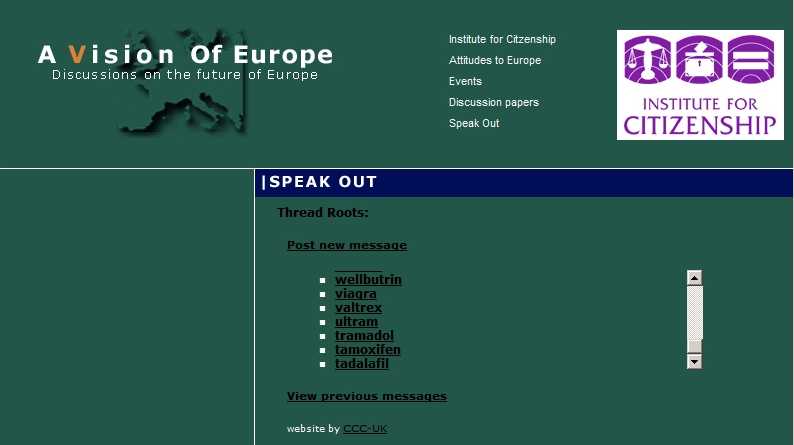
Hilariously, though, the site has been spammed by ads for viagra and other pharmaceuticals (see below - double-click to enlarge), a fate that could so easily befall our own forum as we are constantly assailed by fraudsters trying to sign on a members, requiring constant vigilance in fending them off.


But, if Sykes – with his £10 million or whatever amount he does actually intend to spend – is wasting his time and, if the EU with all its millions to spend, is failing to get its message across, what chance have the rest of us?

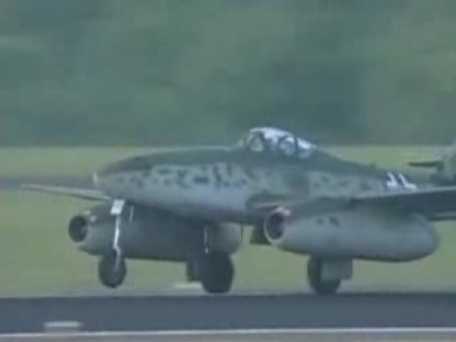
Although Sykes and Wallström are not the only ones calling for a debate, people are just not interested in the European Union. Even we, nerds amongst nerds, find the subject tedious and, as far as the blog goes, we get our highest hit rates when we do not write about the EU. In fact, the less we write about the EU, the higher our hit-rate. But, if we really wanted our hit rate to soar, we would abandon politics altogether and post video clips – one such on U-tube taking better than a half-million hits (see below right).

The comparison is perhaps invidious, given the subject matter of the video, but it need not be the case that the EU attracts so little attention. That it does simply reflects the human condition: people tend not to concern themselves about things they cannot change. And, as long as our membership of the EU is not in question – as long as it stays off the agenda – it is not going to become a mainstream issue.

To make this any different is beyond the resources of Mr Sykes – or any of us. It is going to take one or other of the two mainstream parties to make a conscious decision to put membership on the agenda, pledging to the British people that they intend to take the nation out of the EU. Since neither have the slightest intention of doing such a thing, the subject is going to remain politically dormant unless change is forced upon them.

The question is, therefore, what would it take for either Labour or the Conservatives to take up the cause? In broad terms, the answer is simplicity itself: when or if either party feels that it is of such importance that it cannot win an election without taking it on board. And here, the one tenable scenario is that the Not-the-Conservative Party failing to win power at the next election. In that happy event, Camoron would undoubtedly fall on his sword and, in our dreams, the Party would elect a staunchly Eurosceptic leader who would lead us to the promised land.

That may be the dream, but it is more like a fantasy. Does anyone seriously think that the current group of intellectually challenged pygmies is going to blame its lack of devotion to the Eurosceptic cause as a reason for its failure?

For anyone who does think that, Booker pointed out the obvious this weekend. The BBC line is that the chief reason the Tories lost three elections was that although their recent leaders had all begun by taking a moderate line on "Europe", each had been dragged by the party's Eurosceptics into becoming ever more extreme. And this, he writes, chimes with Camoron's insistence that the Tories failed because "while parents worried about childcare, getting the kids to school, balancing work and family life, we were banging on about Europe".

If that is the current state of play then, what hope is there for Euroscepticism? Is there anything else that would put "Europe" on the top of the political agenda and force politicians seriously to consider our withdrawal from the European Union?

These are, of course, matters we have rehearsed again and again, most recently here and one answer is that the media – goaded and informed by the political blogs – could raise sufficient of a storm to prod the politicians into action. Given the diversity and general lack of political acuity of the British blogosphere, however, that is not so much wishful thinking as delusory, leaving very little in the way of alternative options.

This effectively brings into sharper focus the line of thinking I articulated here, where I wrote of my growing realisation that pursuing the cause of Euroscepticism was a complete and utter waste of time.

For sure, I later wrote that we were going to continue running this blog with a view to building our circulation but I suppose in many ways what puts a line under that is the Sykes campaign.

In between his comfortable little cruises on his private yacht, he has come back to reinvent a wheel, on the back of all the other little groupescules that are inventing their own versions of the wheel, whether Open Europe, the Democracy Movement, Better off Out, UKIP, or whatever, all expending time, money and effort to no effect at all.

Well, the likes of Sykes can waste his money and the others can waste their time – some making a fairly comfortable living in the process – but I have neither time nor money to waste on fruitless endeavours. They can have their fame and glory. I need to find something better to do with what is left of my life.

I may be some time.

COMMENT THREAD

09 October 2006

What, if anything, are you going to do?

"Our streets are full of fear" headed a comment piece in The Sunday Times yesterday, written by India Knight expressing the view that:

Being frightened in the street and even in our own homes - feeling scared to intervene when yobs are behaving badly for fear of one's own safety - has become the norm in this country. We moan about it in the same way that we moan about leaves on the line or automated telephone systems: it's just everyday life.
If this was a crie de coeur from a writer who records some of the appalling goings-on in an inner London council estate, on this blog we have posted cries of equal passion about many things, from the genocidal slaughter in Darfur to - the proximate cause of this blog's existence - the encroachment of the European Union on our daily lives.

Yet, say some of our forum members, all we do is moan and one of them directs a question to us "thinkers", asking, in the context of the growing threat from Muslims in our midst, "What, if anything, are you going to do?" The implication here is that instead of mere "thinking", to say nothing of "moaning", in order to achieve something, "action" is needed.

Turning this round, however, one has to ask what sort of action should we as individuals should be contemplating. Should we be acquiring our own weapons (like our cartoon cat), to spray bullets in certain quarters to reduce numerically the perceived threat? Should we perhaps copy the methodology of some of the Muslim brethren and manufacture our own bombs – something which is remarkably easy to do - placed to achieve the same effect as our bullets?

For those who might cavil at murder, and are of a less violent disposition, how about a mass demonstration? Or a petition? Or writing to the newspaper… or our MPs? Perhaps we should start our own party even? Or what? All of those things… they have proved effective? And, since they have not, what would you have us do? What kind of action do you have in mind?

Turning the argument round again, it seems to us that those who complain about a lack of action have less understanding than perhaps they should of how power is exercised in the United Kingdom.

Although ostensibly a democracy, the convergence of mainstream political parties towards the centre means that elections (and the electorate) now have little influence over policy direction. Instead, the decisions are heavily influenced by "opinion formers" who are able to project their agendas into the corridors of power and thereby determine the issues which are taken most seriously by government.

Classic examples of this phenomenon are "Europe" and "global warming", the latter having steadily risen up the agenda to become a central feature of all the main political parties' agendas, without it ever having been a dominant election issue. And now, so similar are the policies of each party that they could not become a determining issue in an election – all parties are singing to the same hymn sheet.

But, as Booker pointed out in his column this week, not only are the political parties speaking the same language, they and the media are also in cahoots.

There is a particular affinity here between the mindsets of David Camoron and the BBC, which seems identical on global warming. They are both big fans of Al Gore's film, An Inconvenient Truth, which the Boy describes as "inspiring", agreeing that, thanks to man-made pollution, the planet faces disaster. To doubt this, supporters of the Gore thesis argue, is as criminal as to deny the existence of the Nazi holocaust.

One of the most striking attributes of these "true believers", Booker writes, is their insistence that they are supported by a consensus of scientists – something which actually does not exist. But perhaps even more striking is the cross-subject consensus. Remarkably, those who support the orthodox global warming thesis also tend to be Europhile and multi-culturalists. They also tend to be anti-Israeli, anti-war, anti-American and, to a very great extent, anti-capitalist.

Now, the point here is that this "ruling consciousness" does not necessarily represent majority opinion and in a perfect democracy, therefore, should not prevail on so many issues over which it holds sway.

One reason it does is because those who hold these views, by and large, have privileged access to the media. But another reason is that the media is also part of the "ruling consciousness" – there has been no alternative mass medium, though which dissent can be expressed. And, in the absence of any coherent expression of dissent, those in power are often genuinely believe their actions reflect the will of the people.

The importance of this dynamic cannot be over-emphasised. Most often our rulers are not evil people who are determined to foist an agenda on the people. They act in a different way, convincing (or deluding) themselves that their agenda just happens to be the one that the majority agrees with. And because we have lacked the voice by which we can tell them otherwise, our rulers can continue in their delusions that they are implementing our wishes.

Up to press, only direct action such as demonstrating or even rioting could get past this logjam. For the remainder of the time, we have been forced to content ourselves with the "grumbling in the ranks" or moaning, of which we have been accused.

If that is all we were doing currently, the criticisms of our lack of action would be valid. But we are not simply talking to ourselves – crying in our cups, so to speak. Those who post on our forum can hardly be unaware of the fact that we are running a blog and are putting up a large number of serious posts to a steadily growing. Has it not occurred that this itself, is action?

More to the point, if you think about it, influence in a democracy (and even a quasi-democracy of the nature that we have in this country) is about numbers. The media is powerful only because it is listened to by many people. How powerful would the Daily Mail be if it had a circulation of ten, or the BBC if it had only five listeners a week?

Through the wonders of the internet, however, we have the opportunity to make our voices heard and, potentially, we can speak to the same numbers of people that are reached by the traditional media – the MSM. And through this medium we can challenge the ruling consciousness and say, "no – we do not agree with you and your views are not ours".

That, in its own right, is a political act but, equally, reading a blog which disagrees with the perceived wisdom is also a political act. When as is the case, thousands are daily reading such blogs, collectively that becomes a significant political act. If, in the fullness of time, those thousands that read dissenting blogs become hundreds of thousands and even millions, our rulers will listen – they will have to listen because they know – as indeed do we – that if we are able to articulate our dissent and it is then ignored, we will take action. And history tells us that, most likely, it will be violent.

So, to the question, "What, if anything, are you going to do?", we are going to do exactly what we are doing and have been doing for nearly two years. We are going to continue running this blog with a view to building our circulation. Those that agree with our message can rest easy in the fact that, at the hit counter ticks over, the influence of the blog will increase. And, even in our democracy, influence is power.

To conclude this piece, though, many will say that this is not fast enough – the crisis is here and now. There is no time to waste. Well, that is the weakness of democracy (but also its strength). Things tend not to happen until the bulk of people are so excised about a situation that they demand action. At the moment, we have not reached that state. But the solution, collectively, is in our own hands.

COMMENT THREAD

07 October 2006

But what do they need?


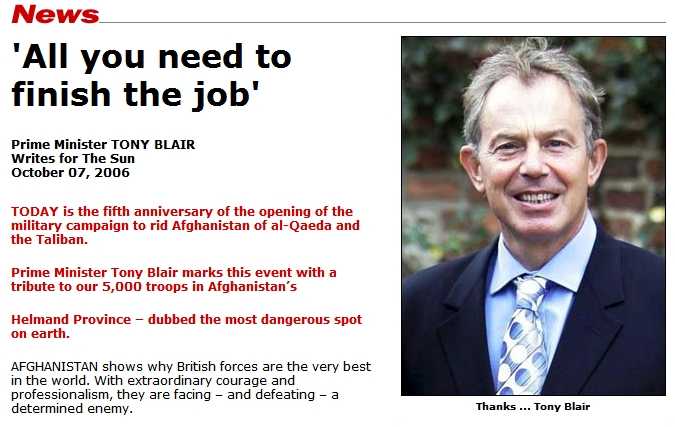
To mark the fifth anniversary of the opening of the military campaign to rid Afghanistan of al-Qaeda and the Taliban, Tony Blair has given a tribute to our 5,000 troops in Afghanistan and promised to give "whatever front-line commanders tell us they need to complete their job".

There can be no doubt about the nature of this commitment, it being set out in an authored piece by Blair in The Sun, repeated in a Reuters report and also conveyed in The Times, the Guardian and even the BBC website. The promise is specific and unequivocal.

The problem here though is in knowing what the front-line commanders actually want – the MoD will certainly attempt to prevent them from making those views public and it can always "spin" any requests to make sure only the right story hits the media.

But there are other issues here – defence procurement is far too important an issue to be left to the military, and especially to front-line commanders. The "toys" tend to be rather expensive and, when it comes to buying them, the military and their defence ministries have a grand and consistent tradition of getting it wrong.

Since it is the (civilian) population which pays for them, it is only right and proper that they should have a say in what is bought (and how many are bought), to which effect it is essential that there should be an open and informed debate.

It is this that really sorts the men from the boys – and the girlies (of both sexes). Avoiding the issue or simply calling for more equipment is a cop-out. To make a sensible contribution to the debate, you have to get stuck in and be prepared to discuss what sort of equipment our armed forces need.

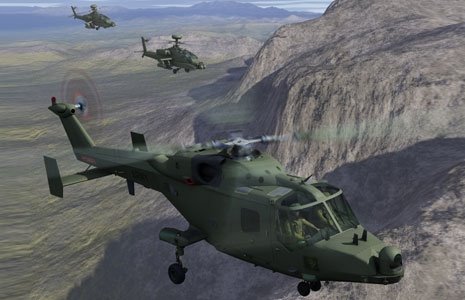
In this, it takes no great expertise (or intellect) to ask the right questions. For instance, there is the issue of whether our forces have enough tactical helicopters. You do not have to be a rocket scientist to wonder whether it is wholly appropriate to go down the "bells and whistles route" and end up buying something like the "Future Lynx" (pictured above) which is so expensive that you can only afford small numbers and then only from 2011, when the need is now.

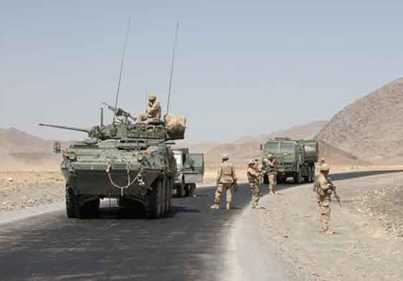
Equally when, according to one national newspaper "Army chiefs" are calling for more armour in Afghanistan, it can hardly be considered too complicated to ask whether tracked vehicles are the answer (or the whole answer), given their huge operating costs and the wear and tear involved, or whether we need a wheeled APC along the lines of the Canadian LAV (pictured right) or both.

This is a massive challenge for the Conservative opposition - which, so far is failing the test - for the media and the blogosphere, both of which are largely avoiding the issue. But here, one can agree with Liam Fox in his conference speech where he declared that, "The price of success in Afghanistan maybe high, but the cost of failure would be catastrophic".

If we cannot afford that failure and can find the time to have earnest debates about whether British Muslim women wear veils or such pressing subjects as civil partnerships, then we must surely make the time to debate how we achieve success.

COMMENT THREAD

Always there when you need them

Things are so much easier to deal with when you take a European approach, with colleagues working in a spirit of solidarity to resolve matters that mere nation states cannot handle. At least, that is what the Europhiles are always telling us.

However – as always – when practice meets theory, it is a slightly different story. With our prisons bursting at the seams, set to reach absolute capacity within days, home secretary John Reid was in Luxembourg yesterday. He was asking his EU counterparts if they would take their own jailed nationals back and bang them up in their own prisons, thus – albeit temporarily – relieving the pressure on the British system.

Of the 79,843 prisoners in England and Wales – against a maximum capacity of 79,968 – it turns out that there are nearly 2,000 from other EU countries, the biggest group - 649 inmates – coming from Ireland. Poland comes a poor second with 155, France is third with 148 and Portugal and Germany have, respectively, 143 and 115. By contrast, less than 800 Brish nationals are banged up in the prisons of EU member states.

But, despite Reid's pleas, the "colleagues" have refused to deliver (or collect, in this case). Apparently, the justice ministers from Slovakia, the Czech Republic, Spain, Ireland and Poland all raised objections to a plan which would allow criminals convicted in any one EU member state to serve their sentences in their home countries.

So far, this idea have been under consideration by justice ministers of the member states for over two years and, despite the urgency of the current situation - with only days left before the Home Office is going to have to dump prisoners in police cells - the EU is still acting with the speed of a somnambulant mollusc. Having failed yet again to reach agreement, ministers do not anticipate reconsidering the issue again until December.

Even then, according to a spokeswoman for the Home Office, an agreement could take "a number of years" and plans are still at the draft stage. Issues which have to be resolved include whether member states could refuse to take back unwanted prisoners and whether prisoners should have a right to refuse transfer.

All this notwithstanding, for once the perfidious British are not being at all unreasonable. Foreign national are twice as likely to commit crimes than the indigenous population and the exponential rise in the prison population has been largely fuelled by foreign nationals.

In 1997, the number stood at 4,677 but, by 2005, the latest year for which data are available, it had surged to 10,089. Thus, in 1997 foreign nationals made up 7.6 percent of the prison population. Last year, they constituted a little under 14 percent.

Needless to say though, this is largely a British problem, reflecting the disproportionately high numbers of immigrants we are accepting. Because of that, one cannot possibly expect the "colleagues" to rush to our aid. We need to remember that "solidarity" is all about give and take. We give – they take – except when we want them to take their criminals back, in which case we find them in an unusually giving mood.

It is so nice to know that our European partners are there for us when we need them.

COMMENT THREAD

06 October 2006

Wrong call

A Rolls-Royce Trent 900 engineThe shock waves from Airbus's incompetence continue to ripple through the system with The Times and others reporting that Rolls-Royce is suspending work on its Trent 900 engine used to power the A380.

The company, we are told, now expects to deliver only 28 of the £10 million engines this year and none next year. Rolls-Royce says it will be reviewing whether any job cuts will be necessary when further clarification on the A380 programme was given by Airbus.

Airbus Chief Executive Christian Streiff, however, does not have that luxury. He has announced the launch of an Airbus revival strategy called "Power 8", which will involve a 30 percent cut in costs, primarily from job losses.

Interestingly, Airbus is also reassessing its production centres, with Streiff understood to be keen to strip out the cost of shipping aircraft parts around Europe. At present, different sections of each aircraft are built in regional plants and then shipped to Toulouse for final assembly.

This model may be changed so that each plant produces one full aircraft, with projected cost savings of €2 billion (£1.35bn) a year from 2010.

The production centre assessment will be completed in about four months' time and will be key to determining the future of the UK division at Broughton in North Wales. The plant makes wings for Airbus that are transported to Toulouse by a tortuous route that includes barges and specially modified lorries.

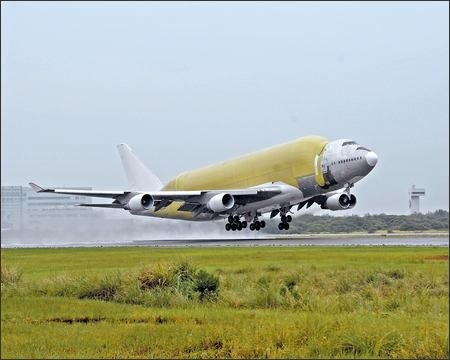
Yet, at precisely the time Airbus seems to be abandoning dispersed production, Boeing is buying into that model big time, with the launch of a new 747 variant, the so-called "Large Cargo Freighter", an aircraft so ugly that "only a mother could call it pretty."

At least three of these aircraft are planned to deal with shipping 787 components which are being manufactured in all 50 states in the US and in countries as far afield as Japan and Australia.

With A380 wing production at Broughton apparently now also suspended, it is beginning to look as if throwing our lot in with the Europeans was the wrong call.

COMMENT THREAD

Choosing sides - 3

These postings seem to multiply in an amoeba fashion but choosing sides is something we all have to do internally as well as externally. Several stories have come up in the last couple of days that require a certain amount of comment.

The Evening Standard today [alas, a website on which you cannot find anything at all] reports two cases of licensed minicab drivers being fined for refusing to take guide dogs in their cars. The reason given was that, being Muslims, they find dogs dirty and offensive.

One of the ladies who was refused to be taken in a cab, which had been summoned by the BBC after she had appeared on News 24, Jane Vernon, complained to the owner of the minicab firm, who, apparently, told her that she should show more respect for other people’s culture. She, in turn, pointed out that the driver had shown no respect for her disability.

Now, this could develop into one of those Human Rights Competitions, as our excellent colleague, Pub Philosopher, calls them but there is a serious issue at stake. It is not dissimilar from the other story that hit the headlines yesterday: the Muslim police officer, with the Lebanese wife who was relieved from his duties outside the Israeli embassy when he raised various personal problems with his superiors. (One rather wonders who leaked the story to the press and just how PC Basha had managed to annoy his colleagues in the past.)

PC Basha and his various supporters, such as the Muslim Public Affairs Committee, who is totally convinced of the British media being in Zionist hands, have not been able to make up their minds exactly why he did not want to do his duty.

On the one hand, there is the question of his wife’s family in Lebanon and, allegedly, PC Basha was worried about their safety. Well, maybe. At least, one can have some sympathy for that, until one recalls that it would take some time and effort for the Hezbollah in Lebanon to work out who he is, to find out when he is outside the Israeli embassy, to work out who his wife’s family are and where they are. In fact, police officers who escort gangland criminals have far greater reasons for being worried.

But that was only one reason and the argument changed very quickly to moral outrage. Apparently, PC Basha was “justified” in being morally outraged by Israeli bombing of Lebanon and, therefore, had every right to ask his superiors to relieve him from duty. I have no desire to go into the rights and wrongs of that bombing. That is not the issue. A police officer has no right to moral outrage when on duty. It is as simple as that.

Furthermore, PC Basha volunteered to serve in the diplomatic protection unit, which is better paid than the ordinary plods are. He need not have done so. What next? Muslim police officers refusing to serve outside No 10 Downing Street because they have been told to disapprove of Tony Blair’s foreign policy?

This is where the saga of the minicab drivers becomes more than just another Human Rights Competition. As the editorial in the Evening Standard points out “the taxi drivers’ acceptance of licences obliged them to carry guide dogs”. And that is really that.

You do not have to be a minicab driver and you do not have to be in the special police unit. But if you are, you obey the rules. That is part of being British or, at the very least, living in this country and being part of this society. There are plenty of benefits but there are also obligations.

The Muslim organizations are doing neither themselves nor other Muslims any favours by shrieking that this is discrimination. Discrimination would be not accepting applications from Muslims to become police officers and stories like that of PC Basha and his vociferous “supporters” will make people think that they are justified in advocating such a development.

While the Shadow Home Secretary, David Davis, has come out strongly on the police issue, we have had nothing but ridiculous bleating from Oliver Leftwing, the Conservative policy chief on the third story of the day, Jack Straw’s comments about his constituents and the veil.

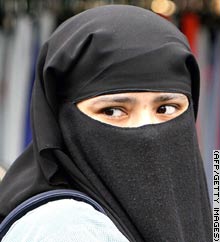
According to Mr Leftwing, the Leader of the House of Commons seeks to deprive Muslim women of the right to wear the veil. In actual fact, Jack Straw has explained that he asks his female Muslim constituents to lift the veil when they come to see him, ensuring every time that there is another woman present. Should they refuse to do so, he would not insist. However, none has refused so far.

Once again, I refer my readers to Pub Philosopher, who points out the difference between Jack Straw’s polite request and the constant demands we get from “angry” Muslims: cartoons, comments, plays, operas, the Pope, you name it.

Jack Straw is now reported as saying that Muslim women should think of discarding the veil as this would ease communication between various communities. Indeed, it would, as anyone who has had to watch women in veils negotiate streets, shopping or the tube would agree. This is not a particularly new idea, incidentally. Discarding the veil was high on Kemal Atatürk’s priorities and was seen as a sine qua non by all Islamic reformer of the nineteenth and twentieth century.

The veil is not like the headscarf or even the full hiljab, difficult though the latter is for women in the modern world to manage. It is something that separates Muslim women from society. Although we have had outraged comments about the veil being integral to Muslim well-being, these are noticeably, mostly, from men. The few female voices were the inevitable spokespersons, such as Dr Reefat Drabu, chairwoman of social and family affairs committee of the Muslim Council of Great Britain, who trotted out the usual bromide about problems that alienate women [presumably she means Muslim women] having to do with foreign policy “and no one seems to take any notice of it”. Well, they might if some of those women were actually allowed to speak openly without a quango-queen go-between. But then, they might say the wrong things.

There is considerable debate among Muslim worthies about the veil. The Koran makes no particular mention of it, calling on women simply to draw their outer garments around them when they go “abroad” among people.

The veil is a cultural development and, for a time, existed in many societies who have discarded it. It remains part of the Arab culture, though not in every country. It is not and has never been part of the culture of the Indian sub-continent. Nor can it be possibly part of the culture of girls and women who were born and brought up in Britain.

The indignation is largely bogus. It may be motivated by that famous Islamic “anger” or it may be motivated by a desire to keep women subjugated. I recall an article by Yasmin Alibhai Brown in which she called for a ban on the burqua, which can and often does hide the signs of violence against women.

Another motivation is the desire on the part of some people to prevent true integration of the Muslim population of this country. They may be people who believe that Britain like other European countries must become part of the Islamic world or they may be people who are worried about their own power slipping away as individual Muslims claim their place in British society. Of course, that place involves acceptance of the law as well as various privileges.

Somehow, I don’t think this will be much of a problem for those women of Burnley who were relieved to lift their veils and talk to their MP genuinely face to face.

COMMENT THREAD

05 October 2006

The chain saw massacres

Despite siren calls for politicians to have more experience of the "real world", it is an interesting fact that businessmen rarely make a successful transition to politics. When they fail, it is because they have little understanding of the nature of politics and the crucial differences between politics and business.

Oddly, it seems that the more successful they are at business, the less likely they are to become good politicians (although the converse is not true), which makes Eric Schmidt, chairman and chief executive of Google, a living embodiment of that principle.

Schmidt was in Britain this week, where he met Tony Blair and then spoke at the Conservative Party conference, sharing with us his ideas of how politics work in the age of the internet.

This we know because the Googler-in-chief was interviewed by the Financial Times, from which we learn that he believes that politicians have yet to wake up to the impact of the internet.

Frankly, you don't even have to be a chief executive of a local parish council to know that, nor indeed would it be worth Schmidt's to come all this way to tell us this next bit – especially as he has got it wrong:

"Many of the politicians don't actually understand the phenomenon of the internet very well," says the man. "It's partly because of their age... often what they learn about the internet they learn from their staffs and their children."

The age bit is totally off the wall. I know politicians in their 30s and 40s who are virtually computer illiterate and men and women in their 70s who are skilled and active internet users.

But Schmidt is totally right about them (politicians) not understanding the phenomenon. What, I suspect, he does not know is why they have such difficulty getting their heads round it.

Strangely, some of the reasons are very simple, amounting to arrogance and snobbery in equal measure. Amongst our élites (of all ages) is the conviction that the computer is an extension of the typewriter and thus only lesser mortals – the hired help – should actually operate them.

You would be amazed to find that even some relatively young men and women – who obviously had a level of computer skills in previous lives – change for the worse when they become paid politicians. In such elevated roles, they seem to take great pleasure from their status, delegating answering e-mails to their staffs, having them printed out so that they can read them.

Beyond the snobbery though, are other factors. These are people, says Schmidt, who are the "TV generation" of political leaders. They have learnt to "switch on" and perform in front of the cameras. Now, they are aware that the internet is important but, adds Mr Google, they had yet to grasp the technology's implications, not least in terms of the power it hands to voters.

Once again, Schmidt misses the point. He forecasts that, within five years, "truth predictor" software will "hold politicians to account". Voters will be able to check the probability that apparently factual statements by politicians were actually correct, using programmes that automatically compared claims with historic data.

But, the art of politics is as much in what you do not say, as in what you do. The most skilled practitioners – of which Blair is a supreme example – are able to say nothing at all but in such a manner as to make the listeners believe (or most of them) that they have made utterances of earth-shattering profundity.

As politicians compete with each other in degrees of vacuity, content becomes thinner and presentation takes precedence over everything else. And that is why the politicians can't get a grip on the internet. They think that a well presented web-site, with manicured messages in the manner of the press releases they send out, or even slick blogs, will do the trick.

What they fail to understand is the intimacy of the medium, that computers are not mere machines but portals into the hearts and minds of individuals – they are highly personal communication machines. With mass media, you can fake it, but you cannot fake communication on the internet - it will eventually show. That is why the Camoron-style blog can never succeed and why the corporate blogs, or "clogs" as I call them, will always fail.

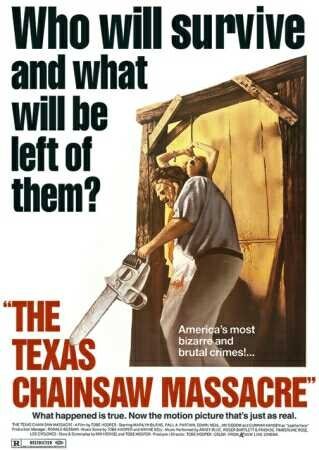
In that sense, the internet is basically anarchic and anti-establishment. That is the basic reason why politicians will never be able to use it effectively. They are the establishment. It is like asking a fine art painter to wield a chain saw - and a good political blog is the intellectual equivalent of a chain saw.

Thus, Schmidt is probably right in predicting that the internet will affect the outcome of elections. But he thinks it will do so by "democratising access to human knowledge". In fact, its effect is to break up the monopoly of information provision, that cosy little cartel managed by the politicians and the media so that "we the people" have equal and sometimes better access to information than they do.

Cliché though it may be, Schmidt is right to remind us that information is power. Those who could grasp it as quickly as it was produced would be some of the greatest leaders of the future, he says. That I doubt – the medium is more of a king-maker. It puts "chain saws" in the hands of the individuals, with which they can do a great deal of damage.

That us where the power lies: any wannabe leaders will have to deal with those individuals if they are to avoid chain-saw massacres. And, for all their slick, clever little "clogs", they haven't even begun to work out how to do that.

COMMENT THREAD

It's that time of the year again

Some of our readers might have noticed that it is that time of the year again – Nobel Prize time. The science prizes are being announced even as we write with economics, literature and the much-coveted peace prize to come.

I would not dare to discuss the science prizes, understanding next to nothing of the achievements for which they are being given out. Undoubtedly, ferocious debates go on in the various scientific communities about their respective prizes. But, whichever way one looks at it, there are definite achievements of varying importance under discussion.

Then we come to economics. It is not technically a Nobel Prize at all, but a Bank of Sweden Prize in Economic Sciences in Memory of Alfred Nobel, instituted in 1969 by Sveriges Riksbank but awarded by the Royal Swedish Academy of Sciences at the same time as the “real” prizes.

This one is a little trickier, economics not being a science and its achievements not being disconnected from politics. The awards, therefore, go to people according to what happens to be the accepted economic theory of the day. On the other hand, it does from time go to highly reputable economists.

The two really contentious ones are the literature and peace prizes. The first of these, as we recall, was awarded to Harold Pinter CH (that’s Companion of Honour, for our non-British readers) last year. Whether his writings do fall easily under the citation for the prize that is to be awarded to
“the person who shall have produced in the field of literature the most outstanding work of an idealistic tendency”
is questionable.

Then again, people with long memories may recall the row occasioned by the Nobel Prize for Literature being given to Boris Pasternak in 1958 and the man being forced to decline it. By 1965 the Swedish Academy had been bullied into giving that year’s prize to Mikhail Sholokhov, a writer of dubious ability or even honesty, let alone idealistic tendency but an excellent Soviet hack and political apparatchik.

When this year’s prize will be awarded has not been announced but one assumes that it will be given either to a little known author from a country, whose literature is rarely honoured internationally or some other anti-American hack.

And so we come to the one and only Nobel Peace Prize, which is awarded, as it was pointed out to me last year, by the Norwegian Nobel Committee to
“the person who shall have done the most or the best work for fraternity among nations, for the abolition or reduction of standing armies and for the holding and promotion of peace congresses”.
One rather wonders about that citation. After all, there is no mention of actual peace being achieved, which is just as well, bearing in mind the state of the world since 1901, merely the promotion of peace congresses. I guess, most of the laureates did promote peace congresses, paid for by the unfortunate Western taxpayer.

If it is reduction of standing armies we want then surely, the prize should be divided between the various governments of Europe who have reduced their standing armies (and navies and air force) to the point of barely existing.

I don’t think I really want to say much about “fraternity of nations”. It is, however, interesting to cast one’s eye down the list of the laureates. Apart from the interesting fact that there were certain years when the prize was not awarded – was there really les peace congressing in 1955 – 56 than in the years before or after? – one is struck by the number of politicians, many of them seriously unsuccessful who have been given the prize at various times.

I note that in 1957 the prize was given to Lester Pearson for introducing peacekeeping forces into the Suez canal area to resolve the crisis. Those would be the forces that meekly left the area in ten years later because President Nasser demanded that they do, thus opening the way to the Six-Day War. Success all round, really.

Even the first prize was shared between the entirely deserving Jean Henri Dunant, founder of the Red Cross and initiator of the Geneva Convention and Frédéric Passy, founder of a completely unknown international talking-shop.

So it goes. Among the laureates have been Henry Kissinger and Le Duc Tho (the developments in Vietnam after the ending of the American involvement there being conveniently ignored), the late unlamented Chairman Arafat, President Gorbachev (was that before or after he sent the tanks in against demonstrators in Vilnius and the Spetznaz thugs in Georgia?), SecGen Kofi Annan together with the UN, the IAEA for not achieving anything at all, one assumes, and so on and so on.

Perhaps, this year we can have the prize shared between the leaders of Hamas and Fatah – well, those of them that will still be alive after the continuing bloodletting.

Just to show that hope always wins over experience, this blog repeats last year’s suggestion for the 2006 laureate - that fine body of men and women who have contributed more to world peace than almost anyone else we can think of: the United States Marine Corps. Is it too late to apply?

The real thing

An 'artist's impression' of the A400M landing on a desert stripAs troubles multiply for the European aerospace giant EADS, the Financial Times has been quoting Airbus Chief Executive Christian Streiff as saying that the revamp of the mid-size A350 XWB project could be at risk.

But more worrying are the implications for our defence capability as Streiff is also saying that the A400M – the military airlifter - could suffer cost overruns or delays. "The timetable is exactly on the edge. It is a tense situation with a number of suppliers and internally. We are exactly on track but without any reserves [of time]," Strieff says.

Britain has ordered 25 of these machines at an expected cost of £2.4 billion, to replace its fleet of 51 US-built C-130 Hercules transports and is suffering a marked shortage of airlift capacity as it waits for Airbus to bring the A400M into production.

Strieff's problem is that the A400M was undertaken by Airbus as a fixed-price contract and he is complaining that, "We have not yet found the right cost base to get to profitability targets," a coded reference to the project over-running its budget.

With the parent group EADS having issued a €4.8bn profits warning following the delays arising from the A380 superjumbo programme, it might not be able to afford to bail out a fixed price military contract.

That there is a potential problem seems to be confirmed by the speed with which Francois Lureau, head of France's DGA procurement agency, came rushing to the defence of the project, declaring that, "the key milestones have been respected and that deliveries are on track for 2009." That, of course, is not the point – the question is whether cost over-runs will force Airbus to pull the plug or slow down production.

In addition to the UK, Germany, France, Spain, Turkey, Belgium and Luxembourg - have the aircraft. South Africa has ordered eight, while Malaysia has ordered four, bringing the order book to just short of 200.

A C-17 on unprepared strip landing trials - the 'real thing'As a straw in the wind, the MoD has now come out openly to tell European politicians to stop meddling in the future of EADS. It is hinting that if they do not the government would reconsider its role as a multibillion-pound customer.

EADS is currently involved in the strategic airtanker contract for the RAF and is also a member of the Eurofighter consortium, but the MoD intervention at this stage could also be a warning over the A400M. With British forces desperately overstretched and in need of additional airlift capacity, the US Boeing corporation is ready and willing to sell the British the tried and tested C-17, which is faster, carries more and is already in service.

It will not be too long before service chiefs get tired of looking at photoshop pics of the A400M (top left) and start demanding the real thing (above right). What price European co-operation then, which consistently fails to deliver the goods?

COMMENT THREAD

Adding to the confusion

Tucked in to the Boy King's closing speech yesterday afternoon was this little gem:

Our armed forces are doing important work in Afghanistan and Iraq. So let the message go out from this conference, to the best armed forces in the world. You are fighting in our name, and we are proud of what you do.
In contrast with some of the other messages delivered by the Boy King, this received massive applause, demonstrating that Tory instincts are still alive and well.

The Boy had not finished though. He want the conference to send our forces a second message, "responding to the questions that our troops themselves are asking". Said the Boy, "They're asking for armoured vehicles that will actually defend them against roadside bombs…".

That is an indication of how far this issue has climbed up the political agenda, although – as you would expect – the Boy had nothing specific to offer: "…we should do more, much more for them," was all he could say, but again to prolonged applause.

According to an incoherent newspaper piece, what the "Army chiefs" actually want in Afghanistan is heavy armour.

This follows concern that the Taliban is planning to replace "human wave" attacks with a much more lethal campaign involving suicide car bombers and roadside explosives. Such a change in tactics was alluded to in July by Tory back-bencher Ann Winterton so the MoD has had plenty of time to get used to the idea.

But what is confusing is an assertion that while the MoD put in an emergency order for Pinzgauer and Cougar armoured vehicles to beef up protection, "senior officers" want heavy armour to provide protection against large car bombs driven by suicide bombers that have destroyed several Canadian vehicles over the summer. Thus the Army is looking to deploying Warriors (pictured left) or even Challenger MBTs by March next year.

Says the newspaper, the Canadians are "also planning to deploy Leopard tanks", something flagged up on this blog last month but it is perhaps unaware that the tanks are not being used primarily for "force protection". They are being deployed to provide a "direct fire capability" in areas of southern Afghanistan where Canadians have encountered resistance from entrenched forces

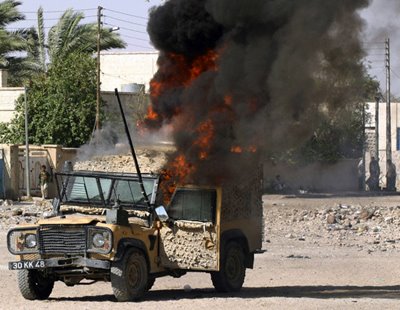
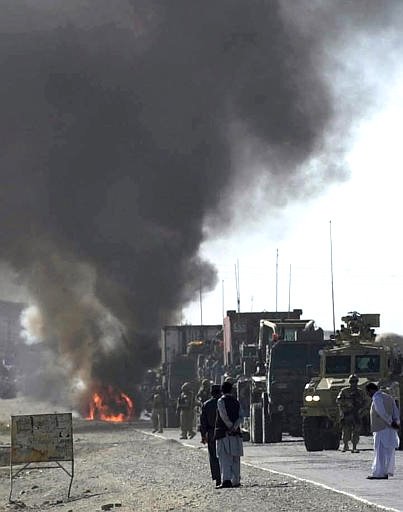
As the Canadians have demonstrated several times now, their RG-31 Nyalas are providing more than adequate protection against IEDs and suicide bombs and, as this dramatic footage shows (right), the real problem is lightly armoured jeep-like vehicles.

The picture shows the effects of a suicide bomber on a motorcycle who attacked a Canadian military convoy in the volatile region west of Kandahar, ramming his vehicle into a G-Wagon. Although no Canadian casualties were reported in that attack, three Afghanistan civilians were hurt and the vehicle was a write-off. Thus, after the recent spectacular demonstration of survivability, arrangements are also being made to send another 21 Nyalas to Afghanistan.

What must be of concern, therefore, is the vagueness surrounding reasons for the deployment of British equipment. Compared with the Canadian RG-31s, the "Cougars" are more heavily armoured, although we are uncertain as to precisely how many of the 100 ordered are to go to Afghanistan.

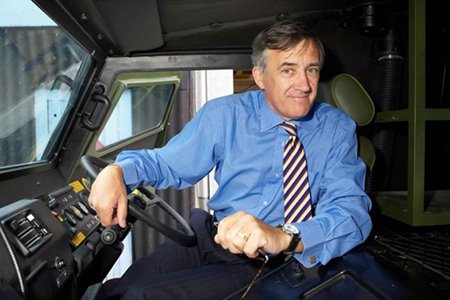
By contrast, the Pinzgauers are dangerously vulnerable, offering little more protection than a "Snatch" Land Rover or armoured G-Wagon. Yet, the Boy King's own shadow defence minister, Gerald Howarth, was recently seen praising the "superb" Pinzgauer, after he had been taken on an "exhilarating" off-road test drive – allowing himself to be photographed for publicity purposes at the wheel of one of the vehicles.

It thus does rather strike me that we need some clarity about what the Army needs. Neither the media nor, it seems, the Army itself, seems to be entirely sure about what it wants and for what purpose its armour should be used. So far, though, all the Conservatives seem to be doing is adding to the confusion.

COMMENT THREAD

03 October 2006

To celebrate or not to celebrate?

[Health warning: Not only is this posting not by Dr North but it is not about the Conservative Party Conference, an event I find so boring that I decided not to attend even the fringe meetings. A number of our readers will prefer to ignore it. Please do so.]

Today is the 16th anniversary of the reunification of Germany. It is a holiday in the country but feelings about the event and its aftermath remain mixed, as Deutsche Welle reports.

Interestingly, the piece mentions that in his days as Chancellor, Gerhard Schröder tried to move the celebration to the nearest Sunday, hoping that at least one holiday of the many in the German economy will be abolished and, possibly, reunification day will die a death.

He was, however, accused of being “unpatriotic” and of wanting to forget history (rather a complex issue in Germany, to which I shall return below. The holiday remained, though it is seen as just another day off work rather than anything significant.
In a recent poll, 68 percent of Germans said the holiday was not a personal cause for celebration, while 80 percent said Oct. 3 should remain a national holiday.
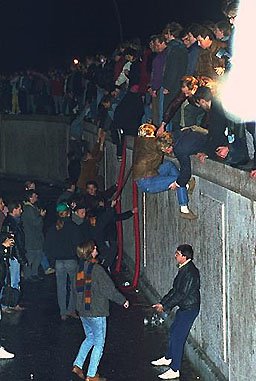
We have come a long way from those heady days when the wall was knocked down by real people power. The economic after-effects are still felt through the country but particularly in the eastern parts whence the flow of workers westwards continues.

According to the latest report on German unity, which the German government publishes annually before Oct. 3, Germany has invested more than 250 billion euros ($317 billion) in direct aid since 1990 in the so-called "new states" in former East Germany. A further 156 billion euros have been agreed upon for the period 2005-2019 as part of a comprehensive economic package known as "Solidarity Pact II."
The figures are spectacular, especially if one compares them to the rather more controlled amounts that the EU had planned to “invest” in the ten new members (with two to come).).However, while all this has contributed to the severe economic problems the country as a whole is facing, the development of the eastern regions has not been as fast as Chancellor Kohl, for one, had predicted.

According to Minister of Transportation, Building and Urban Development, Wolfgang Tiefensee, it will take another fifteen to twenty years for the east to catch up with the west. In the meantime, wages there remain 23 per cent lower than in the west but this does not attract investment since it is assumed, possibly on good evidence, that old East German working habits (they pretend to pay and we pretend to work) have taken deep roots. Unemployment is twice as high as in the west and would be even higher if there were no movement of workers to the western regions.

Politically the results have been mixed but, surely, not too bad. Democracy in West Germany turned out to be strong enough to withstand the shock of reunification and to overcome those problems. By and large, the system has spread to the former DDR with some success and the country now has a Chancellor who is an ossie.

Ironically, this is rather bad news for the European Union as its ideology is firmly based on the evilness of nationalism and, in particular, nationalism in Germany. As expected, younger generations of Germans do not see the need for constant guilt and breast-beating for something that even their grandparents cannot be faulted for. (The parents of those in their twenties were born after the war or at the very end of it and their parents, in turn, would not have been much more than young soldiers or members of Hitler Jugend.)

With Germany a firmly established democracy it becomes very difficult to convince anyone that even that country’s national feelings are a danger to. As it happens, the enemy we are facing now has tried to attack us on that level. It is not just the bombs that are dangerous but the screaming demands that we, Westerners, should abandon our ideas and submit to a completely alien culture. The only way we can fight that is by asserting loudly and strongly our own identity. But the only identity that can matter to people is their national one, hard to define but usually clear to see when it is there. The European Union has weakened the European countries by its project of destroying national identity.

One has to remember, also, that East Germany developed very differently in the forty years after the war. In the first place, there were no demands that East Germans expiate the crimes of Nazism. A number of Nazis, at all levels, were employed by the new regime, whose institutions and standards of behaviour were not all that different and who found the knowledge and experience of the old SS very useful.

On a wider front, it became a given of East German politics that miraculously the citizens of the people’s paradise had escaped the vileness of the Nazi regime. Not our fault, mate, they proclaimed loudly. It is not surprising that the extreme right-wing groups are more prominent in the east of the country. How could it be otherwise? Nobody there was brought up to feel guilty about fascism or nazism.

They were, on the other hand, brought up to feel proud of being communist, even if everyone knew that a wall had to be built across Berlin and barbed wire across Germany to keep the people in. Unlike other walls, this one was not for self-protection.

So we come to another problem. If West Germany has had to beat its collective breast all these years because of the 12 horror-filled years how is it that East Germany has not had to feel guilty either for those years or for the subsequent 40 that had their own share of horrors. Whichever way one looks at it, Germans are asking all sorts of awkward questions and these may not enhance their support for the great European project, a support that was always taken for granted.

COMMENT THREAD

Talking rubbish

Today, Christopher Booker speaks to the Bruges Group fringe meeting at the Tory Party Conference, Bournemouth.

"I'm going to talk rubbish this afternoon," he says. "And I do want to talk about the Conservative Party. But if I also mention booster seats in cars or our new size-based system of postal charges, then any of you who happen to read my column in the Sunday Telegraph might know where I'm coming from." He continues:

In the last couple of weeks I've been writing about the recent spate of controversial new laws which have made plenty of headlines, but which the media seem curiously reluctant to acknowledge as originating from the European Union.

In the past few days we have seen yet another superb example in this new law which came into force on Sunday outlawing discrimination in the workplace on grounds of age. It is quite clear that this is going to create a horrendous new legal minefield (or paradise for lawyers, if you prefer it) Anyway, according to Personnel Today, it is going to "create havoc". Even according to the government itself, it is going to add hundreds of millions of pounds a year to the costs for businesses, as they face a massive escalation in the number of appeals going before employment tribunals. In other words, badly and ambiguously drafted, this is a very bad law.

But why are we only hearing all this now? Do we remember all these points being made when this law was being debated by Parliament? Do we remember thundering editorials making these points as it reached its Second Reading? Of course we don't, because this law wasn't debated by Parliament. The reason why it seemed suddenly to appear as the law of the land was that had been slipped through under the European Communities Act to implement a six-year old Brussels directive. But when this law suddenly became the focus of excitable attention from the media – including no fewer than three long items on last Friday's Today programme - the very last thing the BBC or most of the rest of the media wanted to tell us was where this controversial law had come from.

It was the same with the new law making it a criminal offence to drive a car with a child under "135 centimentres" tall, whatever that may be, unless the child is placed in a booster seat. Despite all the avalanche of media coverage this received, including stories of policemen waiting mob-handed round school gates ready to swoop on any mum who was breaking the law, it took Boris Johnson in the Daily Telegraph to come forward to explain the simple fact that this was yet another law imposed by Brussels which our elected MPs had been given no opportunity to discuss or to vote on.

One of the most glaring recent example of this strange blindness to the way we are now governed has been the way we get rid of our rubbish. In the past few months this has become a major national talking point. The mass of different bins we all now have to put out in the name of "recycling". Then the revelations of how much of what is collected for recycling is not in fact being recycled at all, because there simply aren't the arrangements in place to make that possible, so that much of it is still either having to be landfilled, or it is being shipped out to the East or Africa to be disposed of in ways which do immense damage both to their environment and to their workers.

Our waste policy is a shambles. As it becomes ever harder to dispose of items such as fridges or old motor cars or old batteries or asbestos cement roof slates, we predictably have an unprecedented epidemic of fly tipping. All this gets plenty of coverage in the national and local press. But hardly ever does anyone ever explain why this is all happening. It is happening for the simple reason that our waste disposal policy is now almost entirely dictated by a series of EC directives which bear remarkably little relation to economic and environmental reality, particularly in this country, which is why we have been landed in such an unholy mess,

What is true of our waste policy is also true of far too much else about the way we are now governed. An ever greater proportion of the way our laws are now made and our national policies decided is now being handed over to a mysterious new form of government which bears no relation to parliamentary democracy. Far too many of the policies and laws it produces turn out to be horribly expensive, hopelessly misconceived and don’t work. What is more, when this becomes apparent, there is absolutely nothing we can do about it, because it is a system which is wholly unaccountable.

Yet the most astonishing thing of all is the way in which all this is kept out of view. We had yet another striking example yesterday when the main story on the front page of the Telegraph Business section carried the headline "Labour's rights for workers cost economy £37 billion". The CBI had produced a report stating that, based on the government’s own figures, this has been the cumulative cost to British business of 35 new rights granted to workers under employment regulations since 1998. The obvious message was that this was all somehow the fault of the Labour government. Not a hint anywhere in the story that almost every one of these new regulations originated from the EU. Was the Telegraph not aware that the making of employment law is now a Brussels competence, which means we no longer have the power to make employment law ourselves?

Just consider some of the other areas of national policy we have handed over to this mysterious system. Obviously, the way we run our agriculture and the laws which govern our fishing waters. The way we run every aspect of our environment policy, from how we get rid of our rubbish to the way we are about to cover our countryside with thousands of useless wind turbines. The way we run our competition rules, our immigration rules, our overseas trade, our food safety, our road safety, the regulation of our aviation and shipping, most of our laws on terrorism. And increasingly this is becoming true also of the way we have to run our tax system, not to mention large parts of our foreign and defence policies - very much including the increasingly disastrous way in which we organise and equip our beleaguered armed forces, which has become one of the really shocking scandals of our time.

All these things used to be at the heart of our national political debate. They were the subject of proper discussion in Parliament, They were the very stuff of party political conferences, like this one here in Bournemouth. Yet, bit by bit, all these crucial themes of what our politics used to be about have been allowed to slip away, barely noticed, into that mysterious twilight zone where we can no longer have any significant influence on them.

It is hardly surprising that most people these days no longer have any real idea how most of our laws and policies are decided. The media certainly don't bother to tell us. Any more than do the politicians themselves. They just carry on as if none of this had happened. Until all we are left with is the soap opera of politics. The ‘Tony and Gordon Show’. Will Harriet Harman be our next deputy prime minister? Will Charles Kennedy make a come back? How many acres of newsprint have been devoted to all this kind of rubbish in the past few weeks? Perhaps it is the only kind of rubbish which definitely does get recycled. Again and again and again. But this is just as relevant, I’m afraid, to what is going on here in Bournemouth this week.

A peculiar myth has grown up with the new leadership of the Tory Party that one of the reasons why the party has done so badly in the era of Tony Blair is that it has been too "right wing". And the supreme example of this, we are told, is that the party has been too obsessed with what they call "Europe".

Part of the new deal laid down by Mr Cameron and his friends is that their new Conservative Party must stop talking about anything that can be construed as "right wing", which therefore means, as Mr Cameron puts it that it must stop "banging on about Europe". What was it he said on Sunday?

While parents worried about childcare, getting the kids to school, balancing work and family life - we were banging on about Europe.
His friend George Osborne was saying the same thing again yesterday. "Don't mention Europe" has become the modern version of "don't mention the war".

But those of us who don't live in the Westminster bubble find this rather puzzling. And one reason for this is that we are old enough to remember what the Tory Party has actually been up to over the past decade.

John Major, as we recall, did get in a fearful mess over "Europe". It is perhaps the supreme irony of modern British politics that nothing did more to destroy the credibility of the Tory Party than "Black Wednesday", our collapse out of the European Exchange Rate Mechanism in 1992. From that moment on, the Tories were never again ahead in the polls for 14 years. It was a triple irony, firstly because the Labour Party and the Liberals were even keener on our joining the ERM than the Tory Party. Secondly because our escape from the ERM was, as we know, the best thing that could possibly have happened to our economy, ushering in that decade or more of unbroken growth which really stemmed from the revolution brought about in our economy in the 1980s under Mrs Thatcher. And thirdly it was an irony because it was precisely that strength in our economy, inherited by Labour, which has been the chief underpinning of all Labour's pretensions to have been a successful government ever since 1997.

It is true that when William Hague took over in1997, he did for a while "bang on about Europe" quite a bit. When he made a Eurosceptic speech to the CBI later that year he won a genuine standing ovation. In 1998 at Fontainebleau he gave the most intelligently argued speech made about the future of the European Union by any British politician for years – since. dare one say it, that speech from which the organisation holding this meeting today took its name.

But in those days, of course, the great "European" issue of the moment was whether Britain should sign up to that successor of the ERM, economic and monetary union. And one of the biggest problems facing Mr Hague was that, as soon as he made it clear that he was no more keen for Britain to join than Gordon Brown, he was set upon in the most bizarre way by some of the most senior members of the Party. Day after day on the BBC we heard Kenneth Clarke, Heseltine, Howe, Hurd and Leon Brittan calling for Britain to join the euro. This provoked Mr Hague into such a retreat that by the 2001 election Tory policy on "Europe" had dwindled away into little more than just two slogans: "Save the Pound" and "In Europe but not run by Europe". If you were a Tory spokesman, you were allowed to utter those two little mantras but nothing more - and woe betide you if you stepped an inch off message.

Then came Iain Duncan Smith. The bizarre thing with IDS was that, although the main reason why he won such overwhelming support from the Tory grass roots in the leadership election was that he had a reputation for being a keen Eurosceptic, no sooner did he get into office than we heard almost nothing from him about it ever again. Although it was the very reason why he had been elected, it just seemed to vanish from his agenda - just as he was soon to vanish himself. The very last thing one could say about the IDS interregnum was that the reason why he became so unpopular was his obsession with "Europe".

Then we had the next interregnum, under Mr Howard. A man who was occasionally prepared to flirt with Euroscepticism when it seemed opportune, as when he belatedly called for a referendum on the EU constitution, but who on the whole was as keen to keep "Europe" stuffed away out of sight as his predecessors. Do you remember that revealing moment when, shortly before the 2005 election, he made headlines by calling for more curbs on immigration, only for it to be rather embarrassingly pointed out that what he was asking for would be illegal under European rules? It made us wonder just how much he was actually aware of how far we were no longer able to govern ourselves. But again one could scarcely have argued that the main reason why Howard put off the voters was that he was "obsessed with Europe".

And so we come to that moment a year ago when, thanks largely to a single speech when he showed that he could address conference without notes, the Tory Party came to pick as its leader the man who thinks that one of the biggest mistakes made by his predecessors was to keep going on about "Europe".

The chief principle guiding Mr Cameron in his first year in office, it has appeared, is that he wants to seem as unlike a Conservative as possible. List all the principles traditionally identified with being a Tory, and the rule is now, it seems, that the Tory Party should no longer be seen to stand for them. One result of this, as the latest polls have borne out, is that it has now become a major puzzle for most people to know just what the Tory party is meant to stand for on anything these days.

Much better, the thinking seems to have been, to divert attention from policies by going overboard for saving the planet. If ties are worn at all, they should at all times be green. The important thing is flying off to watch glaciers melt (while being careful to avoid those which are still advancing). Cycling to work (while the chauffeur purrs discreetly behind, and out of shot, with a clean shirt). Putting a mini-wind turbine on one’s roof (which even that great turbine fanatic George Monbiot has realised is a total waste of time and money).

But quite apart from the naïve vacuity of all these gestures, back in the real world there is something else that is very odd about Dave's enthusiasm for "the environment". Not that he has ever given us the slightest hint that he is aware of it, but any power we might once have had to make policy on the environment has long since been handed over to the EU. So there is remarkably little the Tory Party could actually do about the environment unless we could get the Latvians, the Slovaks, the Slovenes and all the rest to agree with us.

Meanwhile, in the real world, we are still left with our rubbish disposal system in chaos, for the very reason that this is something all those same partners of ours have already agreed on. This chaos is being brought about by precisely the same system Mr Cameron would need to help him save the planet. But about the EU's waste policy, which is already a very real environmental issue for millions of people, it seems Mr Cameron has nothing to say whatever.

All of which brings us back to where we started, to where a great deal of the way our country is now run has been handed over to a peculiar form of government which is beyond any democratic control. And almost the first rule of politics these days, whether one is Tory, Labour or Lib Dem, is that we mustn't talk about it. Even if in practice that system is demonstrably failing us, and failing us very badly. Because there is nothing we can do about it. Don't mention "Europe". It has become the massive great "elephant in the room" of our politics.

There is just one issue related to Europe, however, on which Mr Cameron has acted very decisively. And it is worth looking at for a moment because I think it tells us quite a bit about his attitude to Europe and about his style as a leader.
If there is one policy produced by the European Community which more than anything else has been recognised as an unmitigated failure it is the Common Fisheries Policy, hastily and illegally botched up in 1970 as a way of grabbing Community control over the richest fishing waters in the world. I know a little about this because for years I used to report on what a total disaster this had led to – not just a catastrophe for the British fishing industry but an environmental catastrophe of world significance.

The one thing I always found frustrating was that, although everyone in the end was prepared to agree that the CFP was a disaster, no one seemed to have the faintest practical idea as to what to do about it. Tony Blair promised he would do something about it before he was elected in 1997, even if it meant renegotiating the treaty. But he then just rolled over. Three successive Tory leaders, Hague, IDS and Howard, all in turn gave personal pledges that if elected they would pull Britain out of the CFP. But what no one seemed prepared to focus on was the practical question of how our fishing waters could be managed more responsibly; in such a way that fish stocks could recover, while the fishermen themselves might once again be able to earn an honest living.

The one person who finally got round to looking into this was the man appointed by Michael Howard to be his fisheries spokesman, Owen Paterson, MP for North Shropshire. Mr Paterson not only talked to fishermen the length and breadth of Britain. He also visited all the significant fishing nations round the North Atlantic, he went to Norway, the Faroes, Iceland, Canada, the USA, even down to the Falklands. He spoke to fishermen, scientists and politicians in all those countries, and what he found was an eyeopener. He found that in every case they had developed modern fisheries management techniques which have enabled fish stocks not just to survive but to grow. While the fishermen themselves have never been so prosperous. The contrast to the utterly dismal situation here in Europe, particularly here in Britain, could not have been more startling.

What this enabled Mr Paterson to do was to produce a Tory policy for fishing which might at last give some genuine meaning to all those pledges that Britain would pull out of the CFP: a practical strategy which might not just halt an ecological disaster and restore the fortunes of the British fishing industry, but also make it possible for our continental partners to continue fishing in UK waters on a properly sustainable basis. This was the policy, eventually backed by Michael Howard, on which the Tory party won back a good deal of the support it had long since lost from our fishing communities. And this was the policy on which the party fought the last election, when it was noted that in more than one fishing constituency the Tory vote went up enough to win back the seat.

So what was the one European policy which Mr Cameron couldn't wait to drop when he became leader? It was this fishing policy. Instead, as the man put in charge of drawing up a new policy to replace it, he appointed John Gummer, a fanatical admirer of the EU and the man who 14 years ago was more hated by Britain's fishermen than any other fisheries minister we've ever had, because of the zeal with which he set about complying with Brussels' orders to close down a fifth of our fishing fleet.

Three things were particularly striking about this decision. The first was that Mr Cameron didn't make any public announcement about it. He just let it trickle out that the policy had been dropped, in a roundabout way which could not have gone down worse in all those fishing communities which felt that once again the Tories had betrayed them.

Then there was the apparent reasoning behind the decision: to pull out of the CFP was politically impossible because it would mean a treaty change. But at the same time Mr Cameron and his friends have been quite happy to make noises about how they would pull Britain out of the Social Chapter, which would be just as much in breach of the treaty as opting out of the CFP. The very fact that they can be so woolly and inconsistent about this sort of thing makes one wonder yet again just how much these people really understand how the European Union works.

The third virtue of that abandoned fisheries policy was that it was the only serious proposal yet made by anyone to do something to halt the environmental disaster which the CFP has made inevitable, not least through its policy of discarding, which every year forces fishermen to destroy countless billions of fish to no purpose. So, by rushing back to support the CFP. It seems Mr Cameron is apparently quite happy to see that ecological catastrophe continue. Making one again wonder just how much he actually knows or cares about the environment he claims to be so keen on.

So where does this all leave us?

We can sum up by saying that many of the policies and laws which rule our lives are now produced by a weird form of government which is not only wholly undemocratic but also astonishingly inefficient. But no one is meant to talk about it.

We live under a national government which in the past nine years has shown itself to be not only the least efficient but also the most dishonest and corrupt we can remember. In every direction it has inflicted the most appalling damage on our country, from our policing to our private pensions, from our farming to the mess it has made of our local democracy, from the debauching of our honours system to the the largest expansion we have ever seen in the public payroll, from the mass closure of local hospitals to the scarcely believable damage it is doing to our country's defences,

All these, and many more, are issues which cry out for a response based on robust, democratic, common sense Conservative principles. But what do have instead? We have a "Not The Conservative Party", led by a man who would prefer not to talk about any of these things. A man who would rather be seen on the internet washing up porridge bowls in his kitchen than talk about the truly horrifying and tragic mess facing our troops in Afghanistan.

I'm sorry to say this, but I really do hope that what we are looking at here is just another interregnum. It's time the politics of our country got back to the real world.

COMMENT THREAD

02 October 2006

Elections inside and outside the EU

Difficult lot, these Hungarians. It always seemed to me that their membership of the European Union may well signal the beginning of the end of that organization. (Of course, the real fun will start when Romania comes in as well, bringing with it the Transylvanian question. Heh!)

The Poles may not be happy about inadequate financing and no East European country is pleased with l’escroc Chirac’s lofty dismissal of their foreign policy but the Hungarians have brought an entirely new problem into European politics: they seem to be demanding that their politicians tell the truth. Of course, they may be demanding that their politicians do not admit to telling lies.

Whatever the truth is of that, we have seen riots in Budapest and a couple of other cities and, now, a significant vote against the government in the local elections. With a 53 per cent turn-out (the highest for local elections since the collapse of communism and considerably higher than Britain has had for local elections for many a long decade) the right-wing FIDESZ is poised to take control of 18 out of 19 counties and at least 15 of the 23 cities.

The highly respected President of Hungary, László Solyom, has publicly called for the Prime Minister’s resignation but the latter has in what must be a singularly well-predicted statement has refused to do so but has called for a vote of confidence in parliament, one that he is likely to win. He is, Prime Minister Gyurcsány maintains, the only man who can carry through the necessary reforms to bring the Hungarian economy to some approximation of what he has always maintained it was in reality.

Feelings will be running high for the rest of this month. The 23rd will see the 50th anniversary of the beginning of the Hungarian Revolution and there have already been dark mutterings about students and trade unionists coming out on the streets.

The problem is that the Social-Democrats are little more than the old Communist Party that has redesigned itself (though without using green oaks as a logo). Their junior partner the Free Democratic Alliance was formed by the people who had been dissidents, well known in the West, but seen as little more than privileged offsprings of Communists who did well out of the post-1956 period.

There is a feeling, though it is hard to tell how widespread it is at the moment that the people who benefited from the suppression of the revolution will be leading a somewhat hypocritical tribute to the victims and martyrs, shedding crocodile tears over the many memorials.

Meanwhile, over the border in Austria
The conservative People's Party, led by Chancellor Wolfgang Schüssel, won 34.2 percent of the vote, a loss of 8 percentage points from the election in 2002. The Social Democrats won 35.7 percent, raising the prospect that their leader, Alfred Gusenbauer, could replace Schüssel as chancellor, perhaps in a grand coalition with the People's Party.
How this will pan out is unclear though the likelihood of a grand coalition is small. After all, the Austrians can look across the other border to Germany and watch the terminal decline of the grand coalition there.

The right-wing parties have done reasonably well, reflecting the frustration many Austrians have felt for some time with the ruling political elite’s reluctance to deal with the problems they think the country is facing.
For Jörg Haider, the flamboyant rightist leader whose party has been a partner in Schüssel's coalition government, the election was a close call with political extinction.

His party, the Alliance for Austria's Future, appeared to have held on to seats in Parliament, winning 4.2 percent of the vote, just above the required 4 percent threshold. If it had fallen below 4 percent - as pollsters predicted - Haider would have lost his presence in national politics.

The Freedom Party, which Haider led for two decades before quitting last year after a power struggle to start his new party, won 11.2 percent of the vote - a result that positions it to play a strong opposition role. It campaigned on a virulent anti-foreigner platform, calling for Austria to expel illegal immigrants and close the doors to new arrivals.

Placards for the Freedom Party's leader, Heinz-Christian Strache, depicted an Austrian flag over the slogan "Daham Statt Islam," a colloquialism that translates as "Home Instead of Islam."
As ever, it remains unclear whether it is East European immigration (about which the media prefers to write) that is upsetting people or immigration from further afield, probably by Muslims who might have no desire to assimilate at all. To be fair, one must admit, that like Germans, Austrians have made it very difficult for those immigrants who wanted to become part of the country and its society, to do so.

Outside the EU, Bosnia has gone to the polls to elect the government and parliament or, rather, the collection of governments and parliaments and assemblies, that will take over from the office of the international administrator in mid-2007.

While most of the Muslim-Bosnian and Croat politicians favour a reunification of the country and a more centralized government, the Serbs of the Republika Srpska want to continue with the division and may even call for a referendum on independence. (Interestingly enough, they were not that keen on referendums back in 1992 when Bosnia held one under European auspices on whether it should follow Croatia and Slovenia to independence. What goes around comes around.)

Serbia itself will hold parliamentary elections at the beginning of December after the late November referendum on the new constitution that has been passed overwhelmingly by parliament. Among other items, the constitution defines Kosovo, now administered by the UN, as an integral part of Serbia.

COMMENT THREAD