23 November 2006

Kulturkampf

Most people have heard of the phrase supposedly said by Reichsmarshall Hermann Göring: “When I hear the word culture I reach for my revolver.” In fact, he may not have said it and, even if he did, so did other Nazi leaders, such as Rudolf Hess. The real phrase came from a Nazi propaganda play by Hans Johst, whose artistic and theatrical ideas seem to be an uncanny mirror of those enunciated by such luminaries of Communist literary agitprop as Bertolt Brecht.

Somewhere in what sounds to be a mind-numbingly boring play, “Schlageter” about the man who was executed by the French in 1923 for resisting their occupation of the Ruhr through sabotage (you learn a lot on this blog), one of the other characters says: “Wenn ich Kultur höre ... entsichere ich meinen Browning”. “When I hear of culture … I release the safety catch on my Browning.” Much neater, I think.

What would any of this folk or, for that matter, their opponents like Karl Radek, the German Communist subsequently one of the accused in the Second Moscow Trial of 1937, sentenced to a prison sentence and killed by another prisoner, and Brecht, who prudently escaped to the West, say about a press release from the European Commission that is peppered with the word “culture”. Oh I don’t know. Brecht may be quite happy, as long as he could be in charge as he was in East Germany.
It seems that Our Nellie (Kroes) has approved of tax incentives for the British film industry as long as there are "cultural" British films are produced.
The total annual budget for the UK film tax incentive amounts to £120 million (€ 177 million). To be eligible for support under the scheme, films other than European co-productions will have to pass the revised UK Cultural Test. To pass this points-based test, a film must obtain at least 16 of the available maximum of 31 points for different criteria. There are four categories of criteria, including Cultural Content and Cultural Contribution for which up to 20 points are available, ensuring that the aid is directed towards a cultural product. The UK authorities will bring forward legislation to apply the revised Cultural Test and make the scheme operational.
I am rather looking forward to that legislation and the possibility of briefing members of the House of Lords on it (no point in briefing the other lot, they have never heard of films, culture or revolvers).

Think of the definitions one could have for “Cultural Content and Cultural Contribution” and the points to be awarded. Would one, for instance, award points to films that used English classical music and musicians? I think not though, I imagine, rock bands who will disappear within a couple of years from sight may well get the much needed points.

Hugh Grant, now. He has become a national treasure. How many points would a film get if it fielded Hugh Grant and, let us say, Michael Caine? Not that Caine has evinced any desire to act with Hugh Grant but you never know. Then again, Caine is also a Hollywood star, though he lives in England. How many points is that?

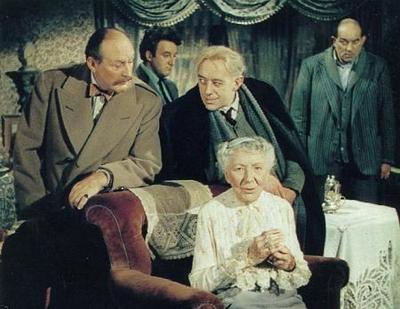
Since the kultukampf of the modern film-making industry does not include ordinary middle class families and their lives (unless it is to show what a sham it all is, though even that is now left to the Americans), no film of the kind Sir Carol Reed or Sir David Lean used to make would pass muster. I mean, would anyone award points to something like "Brief Encounter" or "Waterloo Bridge", not to mention "In Which We Serve" or "Went the Day Well?" or "The Ladykillers"? Surely not.

No Shakespeare play would get the go-ahead unless it showed parallels with the Iraqi war (there not having been any wars ever before in this country’s history); no play by Oscar Wilde would be turned into a film unless it can be updated to make it "relevant" (hint: means nudity); no play that involves any foreign immigrant or asylum seeker would be made unless the latter, usually female and attractive, is to be played by a French film star; above all, nothing English would be shown without winsome charm.

Accountants who deal with the film industry must think they have died and woken up in heaven.

The aid takes the form of an "enhanced tax deduction" and a "payable film tax credit". The "enhanced tax deduction" allows a film production company to benefit from a higher deduction for certain production costs than the normal UK tax rules would allow. The "payable film tax credit2 allows the film production company to receive a cash payment of up to 25% of any tax loss (after applying the enhanced tax deduction). The pre-production, principal photography and post-production expenditure borne by the beneficiary on goods or services that are used or consumed in the UK can be considered under this aid scheme.
Accountancy Age is on the case with Fiona Hotston Moore of MRI Moores Rowland explaining:
If a film was filmed and produced in the UK and the dialogue was in English it would be eligible for tax relief. The new cultural test means that the producer and director will have to be British to claim the reliefs.
Right. So that leaves out all the US companies who brought money into the country by making films here, which is a pity since a number of them, including the makers of the Bond films have been making noises about Britain being a tad too expensive.

It sounds all a bit like those quota quickies of the pre-war period and absolutely terrible they were, too. The idea, enshrined in the 1927 Cinematograph Film Act, was that cinemas must show British made films. Thus a plethora of cheap B-movies was produced in order to accompany the main feature, which was all too often American. Even the British ones made in the mid-twenties were often Anglo-German productions.
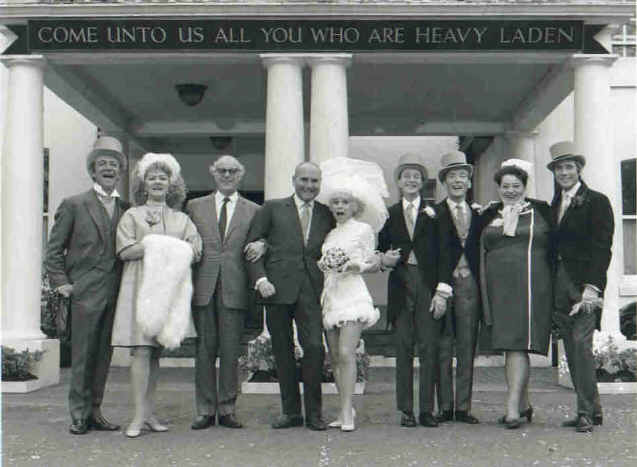
Was it a success? Not according to the distributors who insisted that important changes had to be made in the legislation when it was renewed in the mid-thirties. Would the better British films have been made without the quota? Probably, but one must not say that as that would imply that there is a qualitative difference between various films and this does not depend on where they are made or what nationality the director or the producer might be.

The trouble with all this tax incentive is that the cinemas will continue to show films they think might bring in money and the culturally impeccable, EU-approved, British director made unwatchable rubbish will continue to be left out of everybody’s calculations.

Incidentally, would the enormously successful Carry On films have passed the test?

COMMENT THREAD

22 November 2006

Moving to the end game

Foreign secretary (in name only) Margaret Beckett has announced in Parliament today that Britain could hand over control of Basra to the Iraq government in spring next year. That would be the next and penultimate stage in the retreat started in August, when al Amarah was abandoned to the militias - with entirely predictable results.

"The progress of our current operation in Basra gives us confidence that we may be able to achieve transition in that province ...at some point next spring," says Beckett, building on the claims at the end of October that the Army was close to reaching the "tipping point" in defeating the "insurgents".

At the time, we asked, "do we really look that stupid?" – and now we have an answer. More than stupidity though, it is perhaps that people don't care any more, one way or the other – and just want our troops out. And if it takes a little fiction - like we are winning the battle against the insurgents - to disguise our retreat… well, the government will do what it takes.

In the spring, then, we can see the Army pull back into Basra Air Station and Shaiba logistics base, abandoning its three main bases in the city: Basra Palace, the Shatt al-Arab Hotel and the Old State Building. These will be handed over to the Iraqi security services and then, most likely, ransacked by the militias. At that point, up to 3,000 of the 7,200 contingent will be returned home, some to be available for redeployment to Afghanistan.

The main function of the remainder will be to provide security for the road between Kuwait and the US zones, and the dock facilities at Umm Qasr, protecting the supply lines (and the escape route).

This will leave Basra and the rest of Shia-dominated southern Iraq to the tender mercies of the Iranian-backed militias and their fundamentalist rule, precipitating either civil war or further flight of secular Iraqis. Already, we are told, the meddling of agents of the Iranian Intelligence Ministry is so obvious that in Basra, when the residents want to give an address, "they use the office of the Iranian Intelligence ministry as a landmark."

It also explains why, despite continued and continuing attacks, on the back of the most recent violence, the British government is doing nothing about the humiliating situation where civilians have to be evacuated from Basra Palace.

Despite the availability of defence measures and counter-measures, it has no intention of investing in the equipment necessary to protect its bases, when it intends shortly to abandon them.

Like Lieutenant Colonel David Labouchere, who abandoned the Abu Naji base at al Amarah as a means of stopping the attacks, the British generally seem to have adopted a strategy of retreat as a means of preventing attack.

But it is not their presence, per se that seems to be the problem. According to Hakim al-Meyarhe, president of the Security Council in the elected Basra Governing Council, it is their behaviour. "British forces in Basra have made a lot of mistakes," he says, "and they continue to do so. They're arresting people inappropriately, storming into houses at night; raiding homes and families... They randomly arrest people without any permission from the government. These mistakes make people reactive (sic) negatively and violently."

"That's the reason for the mortar attacks we have here," al-Meyarhe says. "They are specifically directed against the British army interests, they're not attacks on the people of Basra."

With the British sending out such strong signals of its intentions, however, it is hardly surprising that the militias are already jockeying for position and, as we have seen, are launching a murderous campaign against those who are helping the occupiers, making it more difficult to control the region.

Most recently, the target has been the interpreters. At least 21 have been kidnapped and shot in head over the last month, their bodies dumped in different parts of the city. Another three are still missing. In a single mass killing, 17 interpreters were slain.

None of the Iraqis, be they police or army, want to share the fate of the Harkis, giving their loyalty to the occupiers, only to be slaughtered once they leave. Why should any Iraqi trust their lives to the British, who cannot even protect their own?

And so, inexorably, do we move to the end game, a sordid, tawdry example of failure and betrayal, our government abandoning its task unfinished, leaving the Iraqis to a fate unknown. But the worst of it is the spin, the attempt to disguise that unalterable fact, that we are running away. And, in so doing, what – as Charles Moore so eloquently put it – will we have gained?

COMMENT THREAD

Riga mortis?

Yesterday, it was the turn of The Sun to wax indignant about "Our Boys" in Afghanistan.

"We will all rue the day if Afghanistan returns to its role as a training camp for al-Qaeda," it intoned, adding: "There are thousands of other troops from Nato countries in this cauldron of fanatical extremism." Then, raising itself to fever-pitch, it then stormed: "But along with Canada, Holland and a few others, Our Boys are the only ones actually fighting."

It concludes on a different, but equally pertinent note, declaring: "Our troops have the courage and will to fight. But they need the air cover and armour which has been promised... but has yet to be delivered."

This is all part and parcel of a build-up in publicity, prior to the annual Nato summit next week, to be held in Riga, Latvia. Can Nato avoid rigor mortis? The Washington Times asks, pun very much intended. It too refers to the reluctant combatant problem, which has actually been raised by Nato officials themselves, provoking a "vibrant" debate, not least in the Canadian newspapers.

For instance, the influential (in Canada) Toronto Globe and Mail echoes The Sun in reporting: “Europeans shirk combat in Afghanistan…”, while the IHT conveys an AP report on German chancellor Angela Merkel, who "made clear" that Berlin does not plan to send troops to southern Afghanistan.

Against that impasse, we have the Girlie Party's Liam Fox calling on Nato to "stop talking and start acting". Deploying heavily armoured clichés, he wants it to "reorganise the political and military mechanisms of the Alliance to meet the emerging threats posed by a more globalised world."

Fox talks about "regional", inter-linked Nato-like organisations but it is that article in The Washington Times that has the most intriguing offer. "The answer," it says, "may be an alliance with global reach that includes other allies, Australia and New Zealand for instance, that consistently can be relied upon to be there when we need them."

It doesn't actually say it, but the implication is to ditch the Europeans. That sound an awful lot like the Anglosphere and may be part of the answer to Riga mortis.

COMMENT THREAD
We are not alone

Poor little Margot. As communications commissioner, her job is to stoke up enthusiasm for the love of her life, the distinctly jaded European Union.

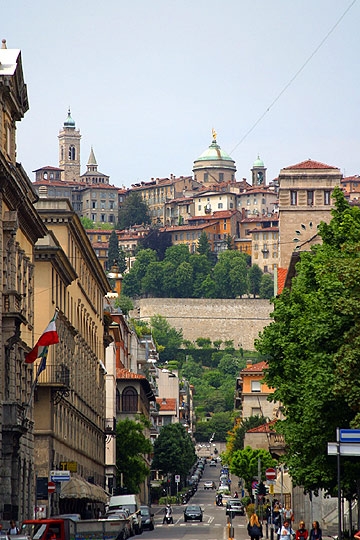
To that effect, as she writes in her latest blog posting, she arranged a massive jolly in the "beautiful city of Bergamo", in Northern Italy. This was for hundreds of representatives of "civil society organisations" to discuss "how to consult and communicate with citizens."

Writes the fragrant one, this was "one of several conferences we are holding as a follow up to our proposal for a new communications policy". She tells us she wanted to get a number of "concrete ideas" for how to improve our interaction with civil society, including how to use the internet better.

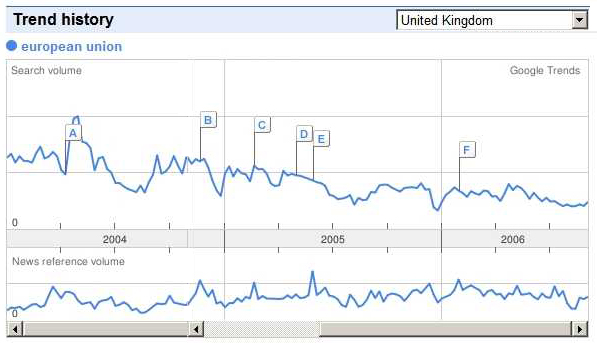
Her problem though is that, as we have already noted, people just don't want to know. But tipped off by UKIP forum, we now seem to have evidence from a remarkable new Google service called search trends.


The service tells you the search traffic for a particular subject, so we entered "European Union", measuring searches originating in the UK for the last three years. And, as the graph above shows, while the news stories generated have been fairly static, the number of searches have been declining for some considerable time.

Contrary to expectations, however, the decline did not start with the Dutch and French referendum results. In fact, the trend seems to be downwards throughout the preceding year.

Repeating the same exercise for all regions gives the same picture, and most European countries also show a downwards trend – although interpretation is difficult as the bulk of searches will not be carried out in English.

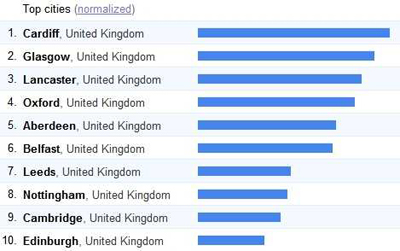
As an added curiosity, the system also shows the relative traffic from different cities in the UK. In the top ten, number one is Cardiff. Glasgow is number two and then, inexplicably, Edinburgh is ten. London does not even feature on the list.

Nevertheless, as to the main graph, our own sense of a lack of interest in the "project" seems to have some support from these data, suggesting that, in our waning interest, we are not alone.

COMMENT THREAD

21 November 2006

Disaster tourism

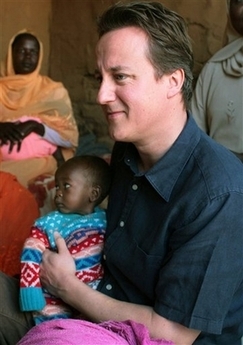
Well, he got his photo-opportunity and a nice collection of snaps for the next Girlie Party brochure – to say nothing of the website. And what better for the leader of caring-sharing Girlie Partie to be cuddling a nice, carefully sanitised little black baby. How sweet!

But the Boy is only one of a long line of disaster tourists to visit the camps outside the Sudanese town of El Fasher. They have received a host of world leaders. Condoleezza Rice, Colin Powell and Jack Straw have witnessed the dust and despair of its shelters. Hilary Benn, the international development secretary, joined the list last month.

According to The Times, however, the stream of politicians has caused frustration within the ranks of aid workers. "The problems here are well known and these camps are pretty well managed," a humanitarian official in El Fasher said. "It would be more productive for people to go elsewhere and raise the profile of some of the other, more-neglected areas."

The Boy will have plenty of time to reflect on this issue as he flies back from Africa in Lord Ashcroft's Falcon jet. We know the hardship he will have suffered in getting there and back, from a brochure which tells us that the:

…beautiful design, unrivalled comfort and outstandingly high performance put the Falcon 900 in a class of its own. From its large cabin to the innovative flight deck and proven technology, this wide body business jet redefines business jet travel.
Nevertheless, the Boy's aides are anxious to tell us that trip was "carbon neutral", and the Girlie Party is paying for the planting of carbon-absorbing trees to match the greenhouse gases generated.

We are sure the refugees in Darfur will be mightly impressed.

You can't beat something with nothing

The great sin of Euroscepticism is now being repeated by the Girlie Party under the tutelage of the Boy Wimp, according to Irwin Stelzer.

As director of Economic Policy Studies at the Hudson Institute, Stelzer concentrates on the Boy’s economic policy. Gordon Brown, he writes, is surely something, "intelligent, dedicated, experienced and a man with an economic record". Yet the Girlies are planning to unseat him with nothing.

The Boy probably hasn't read this yet... and won't take any notice when he does. He would be advised to do so - Stelzer may no longer be a friend of the Girlies but he is a close associate of Murdoch.

But the Boy is in Darfur, "sharing the pain" of survivors in refugee camps, charging himself up so that he can emote with profundity for when he gets to Westminster - after a comfortable trip back in his private jet. Yet, for all the air miles, is he actually offering an alternative policy on Darfur? The international community must keep the pressure on the Sudan government, seems to be what he is saying. That's a policy? That was worth the emissions?

Elsewhere, we read of the diary of Gunner Thornton, killed in September while on active service in Iraq. In that diary, he constantly noted having to wait for help to arrive while out on patrol because the soldiers' armoured vehicles had broken down. After a particularly hard day he wrote: "Dear Tony, Give the army better equipment and stop putting our lives at risk, thanks Thorny."

Thornton wrote of the sinking morale of peacekeeping troops facing stonings by villagers and the ever-present threat of sniper or mortar attack. What, therefore, is the Girlie policy on equipment for the troops? How, for instance, should the government address the threat of mortar attack? I would really like to know, Gerald.

From most of the policies, of course, the Boy has his commissions up and running, and they will come up with answers in due course. But, on some issues – many issues – we can't wait.

It is all very well marking time on some things, until one or other of the Boy's groups comes up with a discussion paper. But life (and death) goes on in the meantime. Policy on things like Army equipment is not only being made but implemented by the government. An effective opposition is about taking on these immediate issues and forcing change, even though not in office.

By harrying government in Parliament, by embarrassing it, by harnessing public opinion and the power of the media, by arguing properly and coherently, and by communicating its resolve to effect change, an opposition party can make things happen. And, in so doing, it demonstrates that it is fit for government.

That, my colleague Christopher Booker has observed many times. People will vote an opposition party into government when it shows itself capable of opposition. That, in the final analysis, is was what got NuLabour into power in 1997. Under Blair's leadership, Labour finally became a credible opposition and people were thus prepared to believe they could be a credible government. But the Girlies haven't yet learned the trick of effective opposition. As Stelzer writes, "All they have to offer is plenty of nuthin'".

As another colleague of mine writes, "Stand by for seven or eight years of a Brown government".

COMMENT THREAD

20 November 2006

Praise indeed

While we are so far off the Tory Boy radar that the invisible man could be used as a warning beacon by comparison, our views on The Boy seem to have struck a chord with Samizdata. If they are the people that the Boy has to bring into the fold, then he is in real trouble.

Furthermore, unless the Boy has got something serious up his sleeve, the visit to Darfur, in media terms at least, has been an almost complete failure.

Unlike the Norway trip, when he was photographed every inch of the way, there have been no photographs so far and only the Telegraph seems to have given the Boy any coverage.

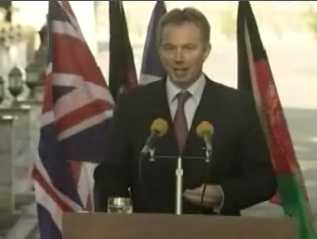
Blair, on the other hand, seems to have done swimmingly well with his visit to Camp Bastion and the his meeting with President Karzai. Once again, of interest, at the joint press conference, we see no EU flags. There are Union Jacks and Afghani flags but no "ring of stars" flags.

Of the many reports, The Times is as good as any, having the prime minister pledge Britain's continuing support for war-torn Afghanistan until after the Taleban is defeated. "Our commitment remains," he told Karzai, "that whatever challenges, whether of security or reconstruction or development, we are up to meeting those challenges with you."

Just how that stacks up with the Mail on Sunday report about troops being denied equipment is uncertain. The paper was fairly certain in its assertion that Brig. John Lorimer had asked for "up to 12 Challenger II tanks", which would put him on a par with the Canadians.

The Brigadier also wants up to 14 Warrior MICVs - which seem to be the wrong equipment for Afghanistan - so we'll be looking at this issue when we get a chance.

But if these are to be denied, Blair did at least inspect the equipment there was at Camp Bastion, giving Private Eye an unmissable opportunity. And despite that, by comparison with the Boy, Blair is sounding almost statesmanlike.

COMMENT THREAD
Repeat after me, I am Leader of Her Majesty's Opposition

You may not know this, from the antics of the Boy-King of the Conservative Party (to give it its official rather than accurate name), but the Queen opened the new session of Parliament last week. In fact, this Blog covered her speech and its ramifications.

What some of our readers, particularly if they do not live in this country, may not realize is that the Queen’s Speech is debated in both Houses for several days, each day being devoted to one or two subject. So, errm, where are the Prime Minister and the Leader of the Opposition? Away, that’s where.

The PM is visiting the troops in Afghanistan. At least, he can claim that it is part of his job and, really, there is no convenient time for that if you start looking at the parliamentary calendar. Except that the beginning of last week was, as Parliament was not sitting.

But why is the Boy-King not in his place, leading the charge? My colleague has dealt with it in part, but I should like to raise other aspects of this issue, not just defence or toys.

Firstly, parliamentary democracy. Yes, I know that to most intents and purposes, it has been abolished in this country, but is that why the Boy-King is absent from his duty? Judging by his inane comments on the subject of “Europe” (must not bang on about it) he has no clear understanding of the way legislation is done in this country, by which I mean the European Union. So, why is he not in the Commons? Does he not think debating the Queen’s Speech is important?

Secondly, his appearance in Darfur. Has he said anything of any interest?
The point of being here is to keep the pressure up on the Sudanese government to reach a proper settlement that will involve a ceasefire, a vastly increased peacekeeping force to stop attacking civilians and also to restart the political process.

The visit tomorrow to the camps gives me a chance to meet people who have been displaced from their homes and to hear their stories about what has been happening in Darfur.
Yeah, right. What kind of pressure can this wretched man bring on the Sudanese government that is arming, financing and training the janjaweed militias? He might conceivably start voicing the view that no more money is to be handed over to Sudan either by Britain or the EU (or, for that matter, the UN) until some sort of order exists in Darfur, which is not the peace of the graveyard but that would not be in line with his new caring view of the world and Conservative foreign policy.

Then again, did he have to go to the camps to know what is going on? Do these unfortunate people need to have the indignity of being stared at by Compassionate Dave and his mates? How did they get there, by the way? Private plane? What of those emissions that Compassionate Dave is so worried about?

Apparently, there was another outbreak of violence this week-end. Oh dear.
The killing needs to stop and I read the reports of the attacks at the weekend in which a lot of people died.
Who writes his script? Actually, I know. One Danny Kruger and one Douglas Smith.

Of course, Darfur is a huge problem, an enormous sore on the world’s conscience. But unless the Boy-King can come up with some practical solutions, there is no point in having meetings with Sudanese ministers and making vaporous comments about the need for international action. Does he have any suggestions as to what Britain can do? It seems not.

Thirdly, there is the point made by the Daily Telegraph that the double reason for the Boy-King’s high profile and completely pointless visit to Darfur is “to take on Gordon Brown on territory - Africa and the Third World - which the Chancellor has tried to make his own. The Tory leader wants to show there are not any no-go areas for his party” and to “re-write Conservative foreign policy so it focuses more on the world’s most pressing humanitarian crisis”.

In what way is Africa and the Third World – rather a large proportion of the world – Gordon Brown’s own territory. It is true that he rushes around periodically, trying to pretend that he is suitable prime ministerial material by promising to sink yet more of the taxpayers’ money into the global black hole called foreign aid but surely one can take him on by simply producing the odd idea or two as to how Britain might be of some real help to the developing and not so developing countries. (Hint: there is very little to be done while our policy is submerged into that of the EU).

As for re-writing Conservative foreign policy, my first reaction to that was sheer astonishment. I had no idea that there was a Conservative foreign policy in the modern, compassionate, ever-changing Conservative Party.

If it does have a foreign policy, clearly it needs to be changed and re-written. After all, we cannot have a situation where the present Party is confused with, say, Margaret Thatcher’s Party. For one thing, she used to win elections. But to re-write it so that it focuses on one particular crisis about which we can do nothing? That’s it? Should a foreign policy not have a few other issues to concentrate on? Such as, for instance, Britain’s national interests, if only we can define them? Or our relationship with other countries, such as the United States or Australia?

It would appear that there is a confusion in the mind of Compassionate Dave and his acolytes, including his speech writers, between policy and meaningless hand-wringing.

Meanwhile, what are is to be done about the Queen’s Speech, which included quite a number of rather nasty legislative proposals?

COMMENT THREAD
Womens' issues?

Talking it over with some of those mystical beasts… women, it really is quite surprising how many issues they are interested in. As well as child care matters, many of them were even interested in the sequence elaborated upon by Booker in his column yesterday and illustrated here.

The first illustration shows a woman, Sharron Elliott. She happens to be a soldier but that is (or was) only her job. She is also, unmistakably a woman.

Unfortunately for Sharron Elliott, the soldier and the woman came in the same body, so issues that interested her as a soldier undoubtedly interested her as a woman. And one of those "woman's issues" was a boat - the transport she and her colleagues were allocated to take them between two riverside bases, the Basra Palace complex and the Shatt al-Arab Hotel, where she worked.

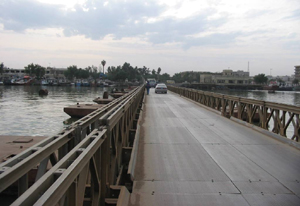
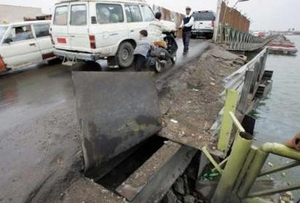
Also of great interest to the woman was another very unfeminine thing, a British-built pontoon bridge spanning the Shatt al-Arab waterway. This her "water-taxi" would have to negotiate when transferring her from one base to another. And so low over the water was the bridge that, at some times, there were only a few spans - close to the bank - under which her boat could pass.

And of absolutely enormous interest to both the soldier and the woman that Sharron Elliott was would have been the fact that, on the morning of 11 November when her boat passed through the span of the bridge, a bomb had been placed in a pontoon. In the mico-seconds that she was aware of it as it detonated, killing her and three of her colleagues - and severely injuring three more - it would have been the single most important thing left in her very, very short life.

Even as a soldier, though - much less a woman, Sharron Elliott would have been entirely uninterested in the wooden casket, tastefully draped with the Union Jack and carried by six good, strong men, performing an extremely difficult drill manoeuvre under the watchful eye of a Royal Marine officer. Had she been alive, she would have undoubtedly been interested. But she wasn't. Her mortal remains were in the casket.

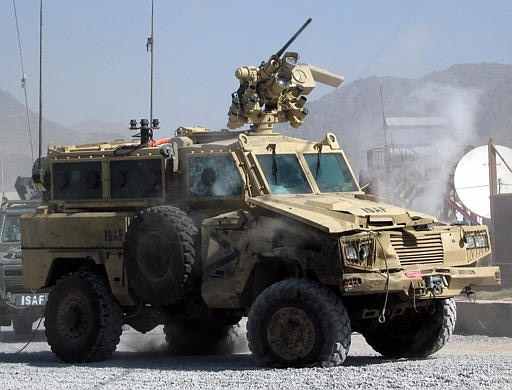
What Sharron Elliott the woman had needed, of course, was the latest in feminine health-care products (illustrated right), available in a fetching sand colour - although other shades can be supplied on application. These, as we know, are fully capable of resisting a wide range of life-style altering events. The RG-31s, as they are known, are just the sort of thing any fashion-conscious woman would want to be seen in, as she passes through downtown Basra.

Strangely though, for all his interest in womens' issues, David Cameron, leader of the Girlies Party, has shown no interest in these beauty aids, the one assured means by which some of his potential voters can stay young and beautiful. Perhaps he prefers them messing about on the river?

COMMENT THREAD
19 November 2006

For the record


Where lies the prestige of a nation, still until recently the fourth largest economy on earth, which once ruled an empire comprising half the peoples of that earth, upon which the sun quite literally never set?

Where lies the prestige of a nation which has a defence budget measured in billions - larger than the entire GDP of some countries - which is able still to keep up with the best in technology and innovation and which maintains armed forces that are amongst the best in the world?

Where lies the prestige of a nation which is being held to ransom by small groups of largely ill-educated religious fanatics, intent on causing murder and mayhem, equipped with cheap, second hand weapons, and in particular the mortar, a weapon which in its present from goes back to before the First World War?

Where lies the prestige of a nation which is failing to deal with this threat, not because the technology does not exist, not because it cannot be done, but simply because it chooses not to spend the money, or expend the energy or the political capital to ensure the threat is neutralised?

Where lies the prestige of that nation which has a military establishment which seems unable for fight for the effective solutions, a media which seems to be unaware that solutions even exist and shows no inclination either to report on them or agitate for their acquisition.

And where lies a nation blessed with political classes which seem entirely unconcerned that we are being humiliated, that our entire foreign policy is at risk and that we stand to lose the prize of an independent and democratic Iraq, also losing the blood and billions in treasure so far expended on that ambition?

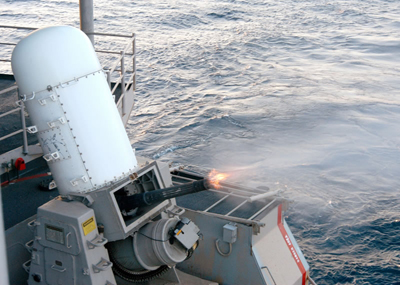
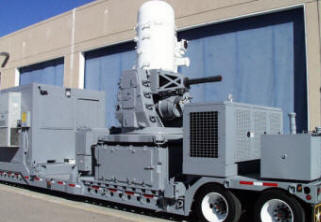
The irony is that the technology not only exists to deal with hit-and-run mortar attacks. In its various components, it is already in use by other forces, as this photograph illustrates, but not by the United Kingdom.

If assembled and deployed in an orderly and coherent fashion by our forces, the resultant systems could serve to fustrate those to whom murder and mayhem is a desirable state and thus send a message that the Western democracies are not prepared to be held to ransom. It would tell the world (and our own population of Muslims) that we have the technology, the expertise, the resources and - most importantly - the political will to defeat violence and the evil men who seek to gain from it.

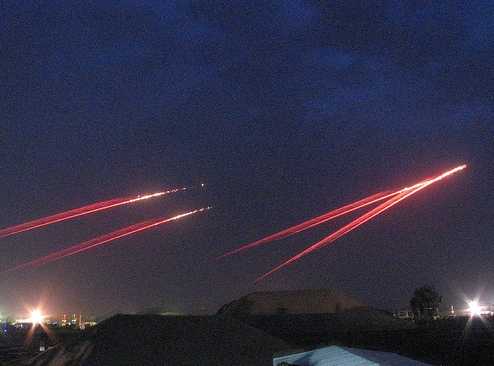
The equipment which makes the agreeable patterns seen above is an adaptation of the Phalanx Close-in Weapons System (CIWS), originally devised in the 1970s for the US Navy to provide last-ditch protection for its ships from anti-ship missiles, when all else had failed. Quite simply, Phalanx is a radar-controlled gun capable of firing 4,500 20mm shells a minute. It blasts missiles out of the sky.

But, while it was developed as a naval weapon, the US military, plagued like us by increasingly bold insurgents - who are now using the mortar as their main weapon after the Improvised Explosive Device (IED) - hit upon a startlingly simple idea. They would shoot down the relatively slow-moving mortar bombs.

With a speed for which the cumbersome US defence procurement system is not famous, Phalanx was put to the test. In a series of land trials, it proved remarkably effective against mortar bombs - being able to destroy about 80 percent of those fired - and also the parallel threat of Katyusha rockets. Naval sets were converted for land use, acquiring the acronym C-RAM (Counter-Rocket, Artillery and Mortar) in the process. By June 2005, the first were being deployed in Iraq and a programme to cover all US bases is currently being rolled out.

The system is not entirely foolproof with, as we indicated, only an 80 percent success rate (maximum).

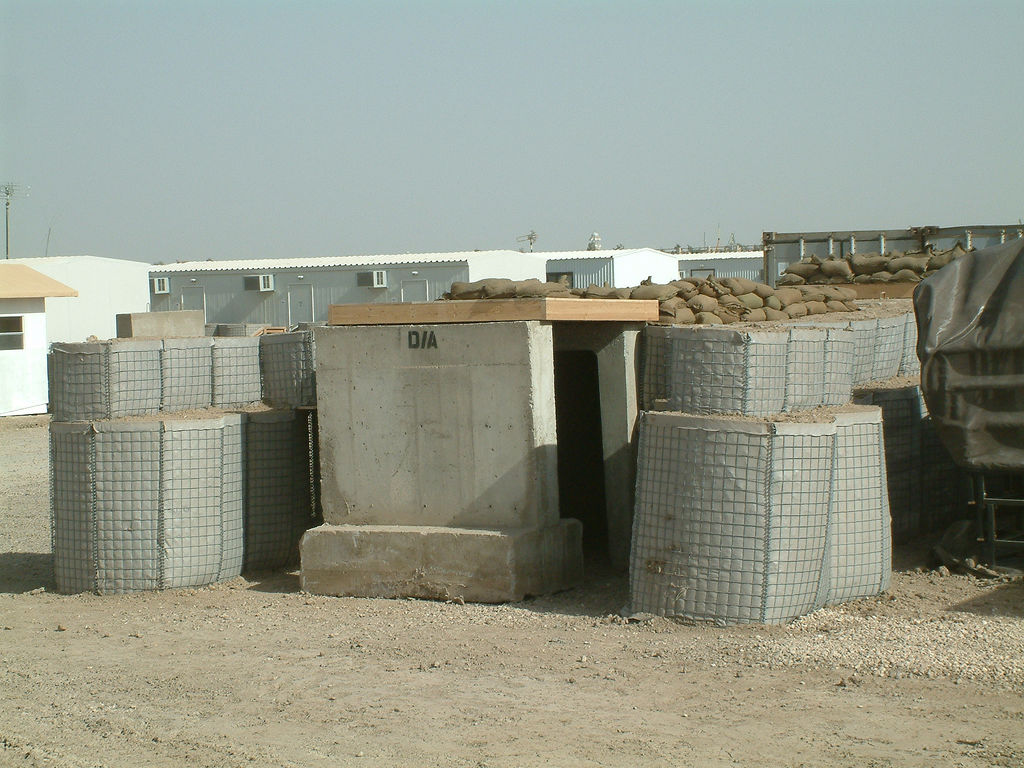
But it is entirely automatic and, even if it fails to destroy an incoming bomb, the characteristic sound of its firing gives audible warning of a mortar strike. By constructing a network of easily-reached refuges and bunkers on bases - often made from the now famous Hesco - the risk to personnel has been very substantially reduced. It is even doing good service in the Baghdad "green zone".

In a highly congested urban environment, such a system might have limited utility. But this is not the case with the base where, recently, a British soldier was killed and another seriously injured. The attack was on the Shatt al-Arab Hotel, when mortar bombs landed inside the base perimeter.

One of the 15 mortar rounds directed at the base actually missed its target and landed on a nearby home, killing two children and injuring a third.

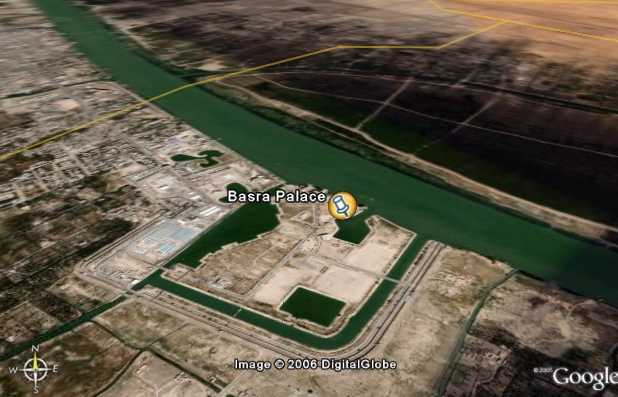
But, as can be seen from the satellite photograph of the base (above), there are clear lines of fire and there is plenty of room to deploy numerous weapons systems.

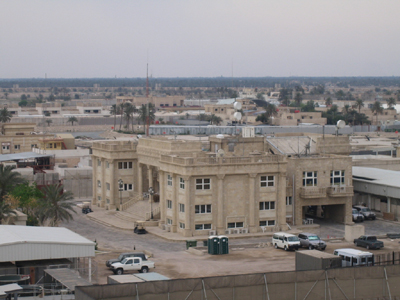
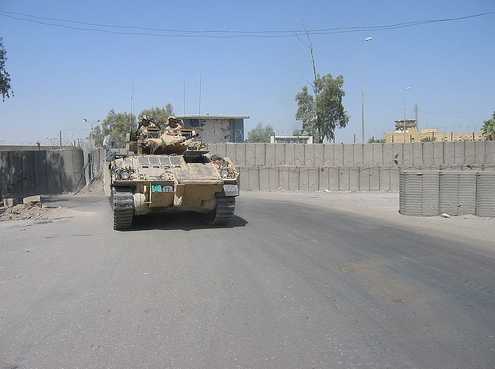
The ground photograph shown (right) - although presenting a limited view - also shows a spacious area, with a Hesco barrier perimeter which could be protected by a suitably deployed weapons system. (The main building can be seen to the right, in the distance, behind the perimeter.)

Nor indeed should deployment of C-RAM prove a problem at Basra Palace, where the Foreign Office recently evacuated the Consulate because of continued mortaring and there troops stationed in the complex have also been subjected to intense mortar fire.

Once again from the satellite photograph, we can see a spacious site, but with some added extras. As one of Saddam Hussein's former palaces, the site is surrounded by a security moat and the areas immediately around the perimeter have been cleared or naturally lack cover. Deployed weapons would have clear lines of sight and be able to cope with incoming mortar bombs in good time.

However good the system is though, it can only provide passive defence - and it should never be the case that an attacker should have free rein. Active counter-measures should always be taken.

For the British forces, we have argued that this could be provided by helicopter assault troops, guided by counter-mortar radar, which, as we have noted, is already available to our forces. That same radar is an integral part of the C-RAM system, providing the initial targeting information to direct the gun radar.

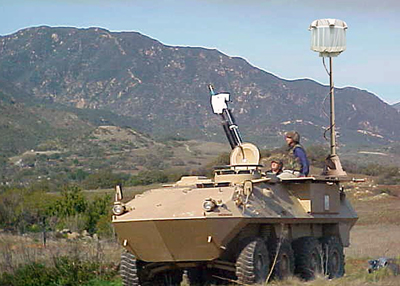
The development of lightweight counter mortar radar, however, has opened up new possibilities which have been exploited by the US Marine Corps. They have mounted the radar on a Light Armoured Vehicle (LAV), which is also fitted with a rapid-fire 120mm mortar, known as Dragon Fire. So sophisticated is this that it can be linked to the rader and rigged to fire automatically at the point from which an enemy mortar is fired.

Despite its effectiveness, though, this system will always have its limitations. As long as insurgents are prepared fire their weapons from crowded urban areas, counter-battery fire will always be restricted. The risks of colateral damage is simply too high.

In this case, precision-targeted weapons - such as the Hellfire missile - come into their own, launched by helicopters, UAVs and ground attack aircraft. But even then, the risk of colateral damage is relatively high and, in any case, few of such weapons are designed to attack targets in urban areas. One that is though, we have mentioned previously. It is the Viper Strike, laser-guided precision missile. With a 7lb warhead and a "top attack" facility, it is an important addition to the armoury.

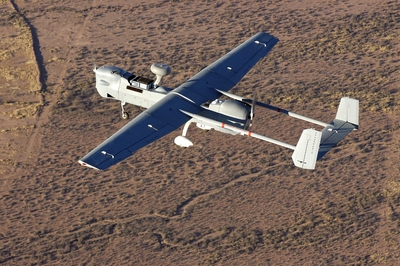
More recently, it has been mated with a new version of a long-endurance UAV, the MQ-5B version of the Hunter, which can carry two Viper Strike missiles on a 16-hour mission.

With just one of these UAVs orbiting a site like the Basra Palace complex, instant retribution could be dispensed to any mortar crew foolhardy enough to risk an attack, making them not only dangerous but, ultimately, futile. And, without the weight of the weapons, Northrop Grumman's new system has demonstrated an ability to fly for more than 21 hours, with a fully-capable surveillance package. Given the UK's lacklustre performance with UAV projects, here is a system which could provide an exceptionally useful asset in the fight against insurgents.

It was only last month that Tony Blair announced that our armed forces could have whatever they need to finish the job. Well, for the record, this post has detailed some of the tools that are needed, the sort of equipment that would avoid the extraordinary situation where we see the British Army evacuate a base, simply because it was being mortared. But now read this from the Mail on Sunday today:


Nothing less than our prestige as a nation rests on the willingness of our government to provide the tools needed to do the job. Can it rise to the challenge? And have we got to the point where we have ceased even to care whether it does, and are content to see our troops run away?

On the current evidence, it looks like our troops are going to be running.

COMMENT THREAD
17 November 2006

They can't cope with freedom

Oh dear, oh dear. This freedom idea is quite a good one but it can go too far. I mean, if people are free to voice their views what will happen to the respect that they should have for their betters, a. k. a. politicians who want to ensure that we do not break out of those boundaries and who, needless to say, have our best interests at heart.

Such seems to be the opinion of Matthew Taylor, the Prime Minister’s outgoing chief adviser on political strategy. Mr Taylor (soon to be ennobled, perhaps?) has also been head of the left-wing think-tank, the Institute of Public Policy Research and is going on to become the chief executive of the Royal Society for the Encouragement of the Arts (RSA).

He was delivering his speech (“speaking as a citizen not a government spokesman”) at a conference on e-democracy. The immediate problem is that the internet and its, as yet unpredictable, consequences are not to be pinned down in conferences attended by those who like attending conferences. (Yes, yes, I know. There is one coming up tomorrow and I am speaking at it but hey, you don’t have to attend it.)

So what does Mr Taylor think about the influence of the internet and the blogosphere on political life? Well, on the one hand it is, of course, a good thing but really, it seems to be contributing to the crisis in the relationship between the people and politicians. How so?

But it was too often used to encourage the "shrill discourse of demands" that dominated modern politics.

And, of course, all too often used to criticize politicians and advance ideas that are beyond that cosy consensus some politicians have built up with the dead-tree and drive-by media.

In fact, the real problem with the internet that it cannot be controlled and real democracy and real desire for freedom is expressed through it. And boy, does it hurt!

The end of deference, the rapid pace of social change and growing diversity were all good things, he argued, but they also meant governments found it increasingly difficult to govern.

"We have a citizenry which can be caricatured as being increasingly unwilling to be governed but not yet capable of self-government," Mr Taylor told the audience.

Excuse me? Mr Taylor has a very odd idea of the relationship between the people and the government. It would appear that he thinks the people are there to obey the government and to exist within the parameters defined by it. Whatever happened to “government of the people, by the people and for the people”?

Of course, Matthew Taylor is not Abraham Lincoln but even so, one would like to hear something substantial than this stuff:

At a time at which we need a richer relationship between politicians and citizens than we have ever had, to confront the shared challenges we face, arguably we have a more impoverished relationship between politicians and citizens than we have ever had.

It seems to me this is something which is worth calling a crisis.

Well, no, I wouldn’t call it a crisis except for the politicians, as their sins are catching up with them, not that they have understood it yet. In particular they find it hard to understand such matters in Britain where the internet and the blogosphere have not taken off in politics as they have done in the United States. Probably there is a great deal more deference on this side of the Pond than on the other.

The internet has immense potential but we face a real problem if the main way in which that potential expresses itself is through allowing citizens to participate in a shrill discourse of demands.

If you look at the way in which citizens are using technology and the way that is growing up, there are worrying signs that that is the case.

What is the big breakthrough, in terms of politics, on the web in the last few years? It's basically blogs which are, generally speaking, hostile and, generally speaking, basically see their job as every day exposing how venal, stupid, mendacious politicians are.

The internet is being used as a tool of mobilisation, which is fantastic, but it only adds to the growing, incommensurate nature of the demands being made on government.

Or maybe it is making just one demand on the government: get out of our lives and stop trying to control us and our opinions. That is what they are afraid of and that is why there is a half-hearted attempt to harness the forces they do not understand by having online interviews with the Prime Minister, blogs by politicians and, most of all, a great deal of weeping and wailing about the uncontrollable nature of the internet.

So bad for people, all this freedom, all this anarchy, all this libertarianism. They should see that we are the people they should listen to. They should stop telling us that we should do less but do it better. All so chaotic. Boo-freakin-hoo, to quote yet again one of the best American bloggers.

So what is Matthew Taylor’s solution?

I want people to have more power, but I want them to have more power in the context of a more mature discourse about the responsibilities of government and the responsibilities of citizens.

You have to be part of changing that culture. It's important for people who understand technology, to move from that frame of mind, which is about attacking the establishment into one which is about problem-solving and social enterprise.

With that in mind, this blog solemnly promises to move on to a more mature discourse about the responsibilities of whoever Mr Taylor wants us to discuss. We shall refrain from attacking the establishment and go into problem-solving and social enterprise, whatever any of it might mean. Then we can all move happily forward into the glorious future where discourse takes place in the context defined by such people as the chief executive of the RSA, formerly chief policy adviser to the Prime Minister.

Then again, maybe not. Maybe we shall stay in that appalling frame of mind that still thinks the establishment has no particular rights not to be criticized for all its mishandling of important matters; that prefers the government to be accountable to the people rather than the other way round; that refuses to allow some jumped up quangoista to define in what context people can have liberty and power.

16 November 2006

Turkey's first quid pro quo

My recent reading matter, apart from the usual EU nonsense and various detective stories, has been Margaret Macmillan’s superb account of the Versailles and various other treaties signed – willingly by some and not so willingly by others – in the immediate aftermath of the First World War.

Towards the end of the book there is an enthralling account (better than most detective stories and all so-called thrillers) of the attempts to divide up Turkey after it had discarded the Ottoman Empire and Kemal Ataturk’s successful way of dealing with it. This did include a terrifying number of casualties and the complete destruction of Greek and Armenian Smyrna. Would it have happened if the victorious allies had not egged the Greeks and the Armenians on to take huge bites out of Turkish territory? Or if they had not decided to station troops in various parts of the country, including Constantinople, shortly therafter to be renamed Istanbul?

Some of those erstwhile allies still think of Turkey as of a country of no importance, except when the possibility of it joining the EU arises. Then, all of a sudden, the country becomes incredibly big and important with far too many people for us to accommodate (which is probably true). On the other hand, let’s face it, if the EU does want to have an army of its own, it will have to take Turkey in. What other country will provide an adequate number of soldiers? And, incidentally, those soldiers are not ragamuffin poverty-stricken peasants carrying rusty old shotguns. It is a well-trained, well-armed, well-equipped military force, highly regarded by many British officers who have had dealings with NATO troops.

We reported not long ago that around the same time as the Turkish writer Orhan Pamuk received the Nobel Prize, a Bill passed the Assemblée Nationale, though not yet the Senate, which said that it would be illegal to deny that the 1915 Armenian massacres amounted to a genocide.

One can see the reasoning behind this piece of legislation. Firstly, as we know, Turkey is of little importance in the world and the overweening Europeans, particularly French can pass any legislation they like about that country.

Secondly, as we also know, Turkey is a huge country with an enormous population and it is, therefore, of enormous importance to make sure that there will be no question of it ever joining the EU. If we concentrate on the subject of the Armenian massacres that will prove that Turkey, in no sense a Francophile country, is not good enough for this wondrously free and democratic Union. (It is a matter of little consequence that, what with the war in Algiers, the assassination and bombing of targets in numerous countries, including West Germany and the near civil war immediately after 1962, France would not have become member of the EU under those conditions either.)

The Turks threatened retaliation and the first segment has come.
General Ilker Basbug, the land forces commander, was quoted on Wednesday by state-owned Anatolia news agency as saying in Ankara: "Relations with France in the military field have been suspended."
Several French firms who have supplied Turkey with weaponry have also been blacklisted and, as my colleague has pointed out, for possibly separate reasons, the Turks have been buying American weaponry.

Well, it is a relief to know that the sophisticated French neither act nor are viewed in the same way as those boorish, arrogant Yanks who trample over other countries’ sensitivities.

The French government is not too happy about the legislation. Possibly, it is coming under pressure from arms manufacturers. But there is not much it can do, having allowed its supporters a free vote in the Assemblée.

If I were the French government and legislators I would spare some thought to Kemal Ataturk and the events of 1920 – 22.

COMMENT THREAD

Except for the recriminations

It was inevitable that today's repatriation of the bodies of the personnel killed on Sunday plus the body of Kingsman Jamie Hancock, would be reported widely. Indeed, over 150 websites have recorded the event.

But there are other things going on. While the BBC ran the latest non-development in the "cash for honours" case, according to the British military spokesman in Iraq, every British location and every single base in the south Iraqi city of Basra was attacked last night (Wednesday).

"Up to 26 Katyusha rockets landed on the outskirts of the British Embassy (illustrated below right) while the Basra Airport, which is also used by British forces as a military base, came under fire and was targeted by nine such rockets," the spokesman said.

A further three rockets landed on the military base at Shaiba, south of Basra while the base on the Shatt Al-Arab strategic waterway north of Basra also sustained four rockets. This, added the spokesman, was the first time the British bases had been targeted by such an intensive barrage of rockets.

Yet this news gets only one mention, and that by the Kuwait News Agency. Not a single British agency or news outlet has reported the news.

To be fair – which I am not very often – four days ago The Telegraph reported that British forces were enduring daily bombardments of mortar bombs and rockets at their bases in Basra.

The paper added that the weapons were believed to be sponsored, funded and smuggled from Iran whose border is just over 10 miles from the southern Iraq capital. Military sources, we were told, had disclosed that there was "very, very strong intelligence" that elements inside Iran had continued to fund and support the gun-running.

Add this the other reports coming in, not least Sunday's attack on the Shatt al-Arab waterway, and there are very clear indications that the security situation is not under control.

The makes all the more prescient a leader in the week’s edition of The Business magazine. It picks up on Blair’s Monday evening speech on foreign policy at the Lord Mayor's Banquet. When we reported on this, we chose to feature Blair’s call to maintain both the EU and US alliances, but The Business – like others – focused on his call for Syria and – especially - Iran to assist in the peace process.

Thus does the leader ask, "Why should Iran talk on Iraq when it is already winning?" Nobody has yet explained, it says, why Syria and Iran should lift a finger to help. Surely it would be more in character for the two rogue regimes to watch America’s discomfort from the sidelines, making the retreat even more humiliating and embarrassing wherever it can. It then concludes:

It is delusional – to put it mildly – to think that Iran and Syria will extricate America and Britain from a mess of their own creation. Why should they? Iran and Syria have won, the West is losing and the world will have to suffer the terrible consequences of this defeat for a very long time.
Well, to judge from the weekend and, now, Wednesday night, this could not be closer to the truth. They are winning and we are losing.

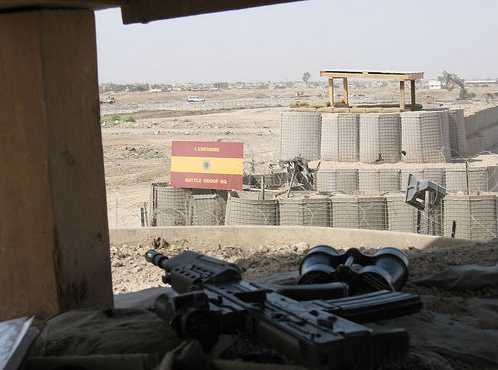
It is probably only through the miracle of Hesco Bastion – the giant, interlocking "sandbags" used for protecting British installations (illustrated right, as used in Shatt al-Arab Hotel) - and the inherent inaccuracy of the weapons used, that there are not more coffins on their way back to Blighty.

But, as many fear, it must surely only be a matter of time before the insurgents "get lucky". Then, and only then, it would appear, will the media and the politicos finally wake up and notice what is going on.

This need not be the case, and should not be the case. If there was action now, the situation is recoverable and the war is still winnable. By the looks of it though we, as a nation, are determined to leave it until it is too late - except for the recriminations.

COMMENT THREAD
When the music has to stop

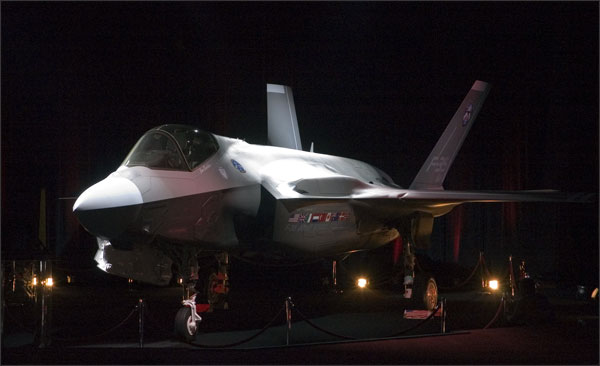
The fate of the Joint Strike Fighter – or F-35 Lightning II as we must learn to call it – has hugely entertained us on this site, with the will they won't they drama of whether the Brits will actually buy it and the parallel saga of the second engine.

Although things have gone somewhat silent and there are still serious funding issues, the UK still seems to be in the game, even though we have yet to hear precisely what has happened to the carrier project.

But there always was going to be a time when the players had to get serious. That time has arrived: the participants in the multi-national project have to commit to the production and support phase.

Leading the way is the Netherlands which on Tuesday became the first of the partner nations to make that commitment. The other F-35 partner nations - the United Kingdom, Italy, Turkey, Canada, Australia, Denmark and Norway - are expected to sign up by the end of December.

Then the music is going to have to stop and the partners are going to have to put up or shut up. For Gordon Brown, that means a serious spending commitment – getting on for £15 billion, including the carriers. I suspect that there is more than a little heart-searching going on in the Treasury. Meanwhile, DID has a good backgrounder.

COMMENT THREAD
The new Euroscepticism

We have been doing it the wrong way. You cannot raise an army to fight against something - anything. You do not fight against, you fight for…

In what he called the "Great Patriotic War", even Stalin knew that. Thus, while our troops fought for "King and Country", he invoked Holy Mother Russia, so that the motivation of Russians became little different from our own.

On that basis, although Eurosceptics are against the EU, there will never be a mass movement based solely on opposition to "Europe". People will man the barricades – metaphysical or otherwise – only for something positive, to support, protect or establish something.

Something quite definitely "positive" is our security. People will fight for their own security, to protect themselves and their own, and will generally give their support to agencies which are devoted to that end – the Army, the police and other "security forces".

And, according to home secretary John Reid, our security is under threat. Speaking on the BBC Radio 4 Today Programme yesterday, he told us that another terrorist attack in the UK is "highly likely".

Now, where there is a high security threat, that takes precedence over many other issues and, when you are effectively fighting for your life, with your armed services engaged in a shooting war number of theatres, many other things tend to drop out of sight. They are less relevant to our main concerns and less of a threat than the more tangible enemies who threaten life and limb.

The European Union is one of those things. It being merely an irrelevance is perhaps the best we can hope for. At worst (from our perspective) it could be seen as a positive asset in the war against terror, assisting the UK and enhancing our security. And not for nothing is the EU doing its best to get involved in security and defence issues, to demonstrate its utility in this area.

In this environment, Eurosceptics are on a loser, unless… If it is possible to show that the EU is actively and dangerously interfering with our capabilities to defend ourselves and ensure our own security then, all of a sudden, the EU becomes a mainstream issue. And because it prevents them achieving what they want, they will be against it big time.

In this situation though, as Eurosceptics, we will not be promoting opposition to the EU as such. Out main priority will be to foster measures that will improve our own security – in its broadest sense – and then simply point out that the EU is stopping it happening.

That, if you like, is the "new" Euroscepticism. We no longer have to point out how terrible the EU is, what it is trying to do, whether it is democratic or not. All that is irrelevant. Even if it might in all other respects be the most perfect organisation on earth, the very fact that it endangers our security is the killer fact – enough to justify complete opposition to it.

Now, as it happens, there is a very strong case to argue that the EU is in fact one of the greatest barriers to our achieving better security. We need not argue that it is a threat to our security – simply that it prevents us achieving it.

And it was this, that Dr John Reid did yesterday, without even realising it, explaining exactly how the EU was putting us so much at risk.

This he did so by pointing out that internal security, defence, foreign policy, immigration control and other issues were all linked – "seamless" was the word he used. Developments in the one affect the other, and vice versa.

Certainly, the anti-war lobby and many Muslim spokesmen claim that there is a link between internal terrorism and British foreign policy. Furthermore, with opinion polls indicating there are 100,000 people in the UK who considered that the July 2005 attacks were justified, the fear is that, the longer our troops remain abroad - especially in Iraq – the more likely radical youth will tip over the edge and support terrorism.

If that is the case, then – for reasons that will come self-evident – the EU might actually be helping to reduce the terrorist threat.

But students of human psychology would doubtless agree that the reverse applies. In the history of human relationships, it is appeasement – giving in to the bully – that triggers further aggression and violence. To defeat the bully requires resolute opposition.

Now, if that is true, then we must confront and face down the bully everywhere we meet him. And no more is that necessary than in the two theatres where we are most closely engaged, Iraq and Afghanistan. Arguably, if we fail to do that, not only would it affect the security situations in those countries, it would have a very significant impact on our own domestic security.

Thinking this through, what would be the effect back at home if our government pulled our troops out of either or both theatres before the job was done? What would be the domestic reaction if we were seen to running with our tail between our legs? What would our own internal enemies think of us if, because the terrorists there had managed to repeat last Sunday's trick and slaughtered a few more troops with their bombs, our government succumbed to pressure and decided that maintaining troops in theatre was no longer sustainable?

Does anyone think that an egregious display of weakness and lack of resolve would convince potential home-grown terrorists that they should stand down their bombs and adopt a normal, civilised lifestyle? Or is it possible that, having scented blood, having perceived an easy victory, they would redouble their efforts and demand more and more concessions from our government?

If you believe that the latter scenario is more likely then it would seem that we have got ourselves in a position where – whether you agreed with the invasion of Iraq in the first instance, or not – we need to keep our troops there to the bitter end. This is not just for the security of the Iraqi peoples but also for the security of our own.

And if that is the case, you cannot be seen to have troops merely existing, skulking in their barracks behind their armour and fortifications, but actively pursuing peacekeeping operations, bringing security and democracy to the troubled nations we occupy. Whether that was in our national interest in 2003 is certainly debatable – it is now. Having been committed to the task, we have no option but to see it through.

In other words if, as Dr Reid asserts, these policy areas are "seamless", then success in dealing with our external commitments is an integral part of ensuring our domestic security.

Now, as we have pointed out, virtually ad nauseum, one of the greatest barriers to dealing with those commitments is the European Union. The damage caused to our armed forces by the European experiment is huge and what is now emerging is that this damage is posing a real threat to our security.

In the context of limited budgets, what is spent on equipping out forces for participation in the European Rapid Reaction Force is not available for spending on the real army.

Thus do we find that we cannot buy the substantial number of additional helicopters that we need. We cannot buy anything like enough specialist armoured vehicles, we cannot afford specialist guns to protect our installations from mortar attack, and we cannot afford the UAVs or the hugely expensive satellite communications network needed to run them.

In short, because of the billions we have already wasted on the European defence project (to say nothing of all the other billions squandered) we are being forced to fight our real wars on the cheap. Because of that, we are in grave danger of losing.

To be in favour of a continued and effective presence in Iraq and Afghanistan, therefore, not only makes good general sense. It is as much a part of the battle against Muslim extremists at home and, by proxy, the battle against the EU. Effectively, pro-war is anti-EU. On the other hand, support for the EU and all it stands for can only ensure our eventual surrender to the fanatics.

And thus did I learn to stop worrying and love the war.

COMMENT THREAD